English
 Español
 tiếng việt
 русский
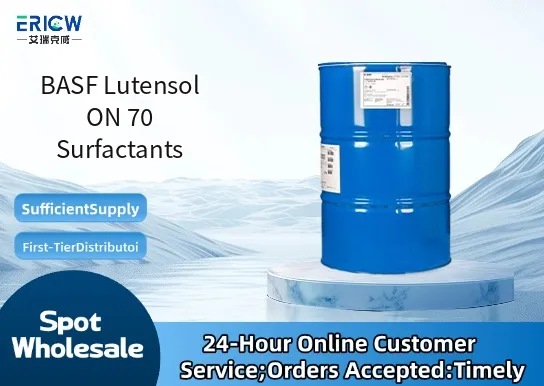
Nonionic surfactant based on ethoxylated linear primary alcohols with optimized hydrophilic-lipophilic balance (HLB ≈ 13.5).
Excellent wetting, emulsifying, and solubilizing performance in aqueous systems across a broad pH range.
Low foaming profile suitable for high-shear and industrial cleaning applications.
Good biodegradability and favorable ecotoxicological profile consistent with OECD 301 series testing guidelines.
Stable in hard water and compatible with common anionic, cationic, and other nonionic surfactants.
Industrial and institutional cleaners (I&I), including floor cleaners and degreasers.
Agrochemical formulations—particularly as emulsifier in EC (emulsifiable concentrate) and SE (soluble emulsion) products.
Textile auxiliaries for scouring, dye leveling, and dispersion stabilization.
Paints and coatings—used as co-emulsifier and stabilizer in acrylic and styrene-butadiene latex systems.
Household liquid detergents and dishwashing formulations requiring low-foam, high-efficiency surfactancy.
| Chemical Type | Nonionic: Ethoxylated linear primary alcohol (C13–C15, avg. 7 EO units) |
| Product Form | Liquid |
| Appearance | Pale yellow to colorless, clear to slightly opalescent liquid |
| Active Content (wt %) | ≥ 68.0% |
| pH (1% aqueous solution, 20 °C) | 5.5 – 7.0 |
| Density (20 °C) | 1.02 – 1.04 g/cm³ |
| Cloud Point (1% aqueous solution) | ≈ 65 – 70 °C |
| HLB Value | ≈ 13.5 |
Q1: What is the primary chemical nature of Lutensol ON 70?
A: Lutensol ON 70 is a nonionic surfactant based on ethoxylated octylphenol, featuring a hydrophobic octylphenol core and a hydrophilic polyethylene oxide chain with an average of approximately 7 moles of ethylene oxide per molecule.
Q2: In which types of industrial cleaning formulations is Lutensol ON 70 commonly used?
A: It is widely employed in alkaline and neutral-pH heavy-duty cleaners for metal parts, industrial degreasers, and maintenance cleaning products where good emulsification of mineral oils and compatibility with builders and chelants are required.
Q3: How does temperature affect the performance of Lutensol ON 70 in aqueous systems?
A: As a nonionic surfactant, Lutensol ON 70 exhibits decreasing solubility with rising temperature, and its cloud point typically falls within a moderate range — making it suitable for warm-water cleaning applications but less ideal for high-temperature continuous processes without formulation adjustments.
Q4: Is Lutensol ON 70 compatible with common anionic and cationic surfactants?
A: It shows good physical compatibility with many anionic surfactants (e.g., LAS, alkyl sulfates) in formulated systems, though interactions with strongly cationic species may lead to precipitation or reduced efficacy and should be evaluated case by case.
Q5: What are typical dosage guidelines when using Lutensol ON 70 in cleaning concentrates?
A: Dosage depends on formulation requirements and soil type, but it is generally used at low concentrations — typically ranging from 0.1% to 2% by weight in finished products — with optimization guided by performance testing under actual use conditions.
Contact With Us:
E-mail: wangxingqiang@ericwchem.com
Have a Questions? Call Us:
Add:
Building A1, Jiete Industrial Park, Huangpu District, Guangzhou City, Guangdong Province, China