English
 Español
 tiếng việt
 русский
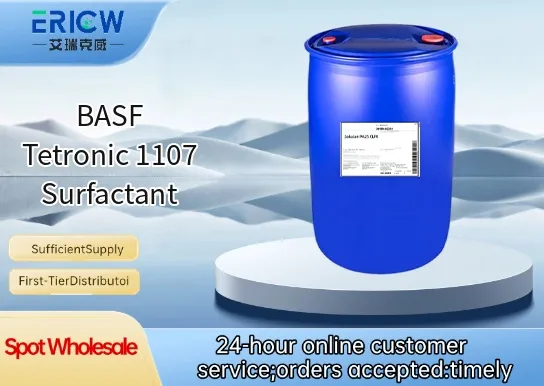
Non-ionic triblock copolymer based on polypropylene oxide (PPO) and polyethylene oxide (PEO) architecture.
Excellent temperature-responsive solubility behavior with reversible micellization above critical micelle temperature (CMT).
Highly effective stabilizer for oil-in-water and water-in-oil emulsions across broad pH and electrolyte ranges.
Low cytotoxicity profile, supporting formulation development in pharmaceutical and dermocosmetic applications.
Good compatibility with active ingredients, polymers, and other surfactants in complex multi-component systems.
Drug delivery systems, including thermosensitive hydrogels and nanostructured carriers for controlled release.
Dermocosmetic formulations such as moisturizing gels, anti-aging serums, and micellar cleansing solutions.
Stabilization of agrochemical suspensions and microemulsions for improved bioavailability and field performance.
Functional additives in personal care products requiring mildness, clarity, and low irritation potential.
Templating agent and dispersant in nanomaterial synthesis and colloidal processing.
| Chemical Type | Non-ionic triblock copolymer (PEO–PPO–PEO) |
| Product Form | White to off-white flake or granular solid |
| Appearance | Free-flowing, hygroscopic solid at room temperature |
| Primary Applications | Pharmaceuticals, dermocosmetics, agrochemicals, nanomaterials |
| Key Features | Thermo-responsive, non-ionic, biocompatible, low foaming |
| Benefits | Enables in-situ gelation, enhances solubilization, improves formulation stability |
| Solubility | Freely soluble in water, ethanol, and ethylene glycol; sparingly soluble in hydrocarbons |
| Storage Conditions | Store in original container at 15–25 °C, protect from moisture and direct sunlight |
Q1: What is the primary functional role of Tetronic 1107 in formulations?
A: Tetronic 1107 is a thermoresponsive, nonionic polyether-based surfactant that functions primarily as an emulsifier, solubilizer, and stabilizer—especially effective in aqueous systems where temperature-dependent phase behavior is leveraged for controlled release or formulation structuring.
Q2: Is Tetronic 1107 suitable for use in personal care applications?
A: Yes—it is widely used in mild, rinse-off and leave-on personal care products such as cleansing gels, moisturizing lotions, and micellar solutions, owing to its low irritation potential, good compatibility with active ingredients, and ability to enhance skin feel without compromising stability.
Q3: How does Tetronic 1107 behave under varying temperature conditions?
A: It exhibits reversible thermal gelation: remaining fully soluble and fluid at lower temperatures, then undergoing a sol–gel transition upon heating to form a transient, self-supporting network—making it valuable for hot-process formulations and temperature-triggered delivery systems.
Q4: Can Tetronic 1107 be combined with ionic surfactants or electrolytes?
A: Yes—it demonstrates good tolerance toward moderate levels of electrolytes and can be compatibly blended with many anionic and cationic surfactants, though synergistic or antagonistic effects should be evaluated empirically in the target system due to its unique PPO-PEO-PPO architecture.
Q5: What are typical dosage guidelines for Tetronic 1107 in industrial applications?
A: Dosage depends on formulation requirements but generally ranges from 0.1% to 2% by weight; optimal performance is achieved when selected based on desired viscosity profile, emulsion stability, or solubilization capacity—not by fixed concentration alone.
Contact With Us:
E-mail: wangxingqiang@ericwchem.com
Have a Questions? Call Us:
Add:
Building A1, Jiete Industrial Park, Huangpu District, Guangzhou City, Guangdong Province, China