English
 Español
 tiếng việt
 русский
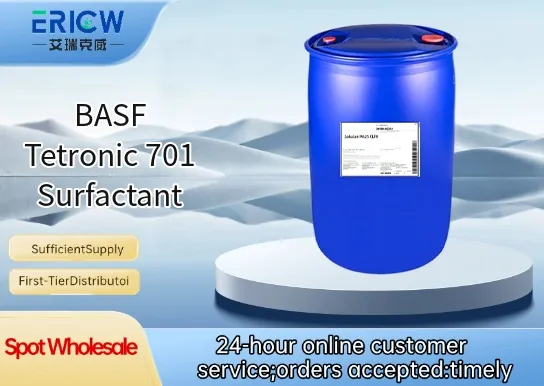
Pluronic®-type triblock copolymer (PEO–PPO–PEO) with high hydrophilic-lipophilic balance (HLB ≈ 18–20).
Excellent solubilizing and emulsifying capacity for hydrophobic actives in aqueous systems.
Non-ionic, low-foaming, and compatible with electrolytes, acids, and bases across broad pH range.
Thermally responsive—exhibits reversible micellization and gelation behavior near physiological temperatures.
EU REACH registered and compliant with ISO 9001 manufacturing standards.
Topical pharmaceutical formulations (e.g., gels, creams, and transdermal delivery systems).
Personal care products requiring mild, non-irritating solubilizers (e.g., micellar cleansers, serums).
Agrochemical adjuvants for enhancing foliar uptake of active ingredients.
Industrial cleaning formulations targeting oily soils in low-temperature processes.
Biotechnology applications including protein stabilization and cell culture media supplementation.
| Chemical Type | Non-ionic triblock copolymer (PEO₇₀–PPO₂₉–PEO₇₀) |
| Product Form | Pale yellow to amber viscous liquid |
| Appearance | Clear to slightly opalescent, homogeneous liquid at 25 °C |
| HLB Value | ~19 (calculated) |
| pH (1% aqueous solution) | 5.0–7.0 |
| Solubility | Freely soluble in water, ethanol, and propylene glycol |
| Storage Conditions | Store at 15–25 °C; protect from freezing and prolonged UV exposure |
| Primary Applications | Solubilizer, emulsifier, stabilizer, and micelle-forming carrier |
Q1: What is the chemical nature of Tetronic 701 and how does it differ from conventional surfactants?
A: Tetronic 701 is a polyether-based triblock copolymer belonging to the Tetronic® family, characterized by a unique star-shaped architecture with a central ethylenediamine core and four poly(propylene oxide)-poly(ethylene oxide) arms. Unlike linear nonionic surfactants, its multi-armed structure imparts enhanced steric stabilization, improved temperature responsiveness, and superior interfacial activity in complex formulations.
Q2: In which types of formulations is Tetronic 701 most commonly used?
A: Tetronic 701 is widely employed in advanced personal care emulsions (e.g., silicone-in-water systems), pharmaceutical solubilization and micellar delivery vehicles, and specialty agrochemical suspensions. Its ability to stabilize challenging interfaces—especially where high electrolyte tolerance or low-foaming behavior is required—makes it particularly valuable in performance-driven liquid formulations.
Q3: How should Tetronic 701 be incorporated into a formulation for optimal performance?
A: It is typically added during the aqueous phase or as a pre-dissolved solution at ambient to moderately elevated temperatures (up to ~50 °C). For emulsion systems, incorporation prior to high-shear homogenization generally yields the most consistent droplet size distribution and long-term stability. Dosage depends on formulation requirements but generally ranges from 0.1% to 2% by weight relative to the total batch.
Q4: Is Tetronic 701 compatible with common preservatives, thickeners, and active ingredients?
A: Yes—Tetronic 701 demonstrates broad compatibility with typical cosmetic preservatives (e.g., phenoxyethanol, sodium benzoate), associative and non-associative thickeners (e.g., xanthan gum, acrylates/C10–30 alkyl acrylate crosspolymer), and a wide range of hydrophobic actives including retinoids, vitamins, and essential oils. Compatibility testing under intended use conditions is still recommended due to system-specific interactions.
Contact With Us:
E-mail: wangxingqiang@ericwchem.com
Have a Questions? Call Us:
Add:
Building A1, Jiete Industrial Park, Huangpu District, Guangzhou City, Guangdong Province, China