English
 Español
 tiếng việt
 русский
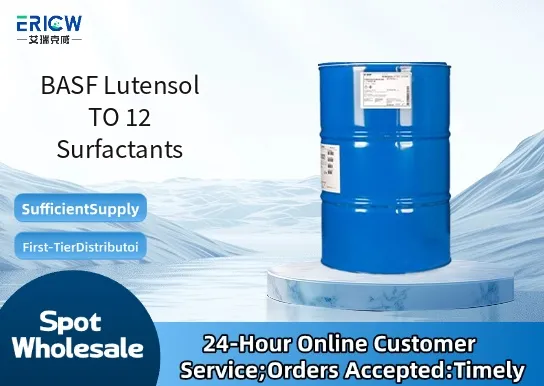
Nonionic surfactant based on linear alcohol ethoxylate (C13–C15, ~12 EO units) offering excellent balance of wetting, emulsification, and detergency.
Low foaming profile suitable for high-shear and industrial cleaning applications where foam control is critical.
Good hard water tolerance and stability across a broad pH range (pH 4–12).
Eco-preferred formulation: readily biodegradable (OECD 301B compliant) and low aquatic toxicity.
Compatible with anionic, cationic, and other nonionic surfactants, enabling versatile formulation flexibility.
Industrial and institutional cleaners (I&I), including floor cleaners, glass cleaners, and degreasers.
Agrochemical adjuvants for improving pesticide solubilization, spreading, and foliar retention.
Textile auxiliaries in scouring, dye leveling, and spinning oil emulsions.
Paints and coatings as a stabilizer for pigment dispersions and latex emulsions.
Home care liquid detergents and automatic dishwashing formulations requiring low-foam performance.
| Chemical Type | Linear alcohol ethoxylate (C13–C15, ~12 mol EO) |
| Product Form | Pale yellow to amber viscous liquid |
| Appearance (at 25 °C) | Clear to slightly hazy liquid |
| Active Content (wt %) | ~99.0–100.0% |
| pH (1% aqueous solution) | 5.5–7.0 |
| Cloud Point (1% aqueous solution) | ~62–66 °C |
| Solubility in Water | Freely soluble at room temperature |
| Primary Applications | Cleaning, emulsification, wetting, solubilization |
Q1: What is the primary function of Lutensol TO 12 in industrial formulations?
A: Lutensol TO 12 is a nonionic surfactant based on linear alcohol ethoxylates, primarily used for its excellent wetting, emulsifying, and solubilizing properties in aqueous systems. It supports stable dispersion of hydrophobic components and enhances surface activity in cleaning, agrochemical, and industrial maintenance applications.
Q2: Is Lutensol TO 12 suitable for low-foaming applications?
A: Yes — due to its balanced ethoxylation and linear alcohol backbone, Lutensol TO 12 delivers moderate to low foaming behavior under shear and in hard water, making it well-suited for high-speed cleaning processes, CIP systems, and formulations where foam control is critical.
Q3: How does temperature affect the performance of Lutensol TO 12?
A: As a typical cloud point surfactant, Lutensol TO 12 exhibits a distinct cloud point (typically above 60 °C), where solubility decreases with rising temperature. This characteristic enables temperature-triggered phase separation in specific processes such as dyeing auxiliaries or controlled-release formulations, while maintaining good cold-water solubility for ambient-use applications.
Q4: Can Lutensol TO 12 be used in combination with ionic surfactants?
A: Yes — Lutensol TO 12 is generally compatible with anionic, cationic, and amphoteric surfactants, enabling synergistic performance in blended systems. Compatibility should be verified experimentally in the final formulation, particularly when high electrolyte content or extreme pH conditions are present.
Contact With Us:
E-mail: wangxingqiang@ericwchem.com
Have a Questions? Call Us:
Add:
Building A1, Jiete Industrial Park, Huangpu District, Guangzhou City, Guangdong Province, China