English
 Español
 tiếng việt
 русский
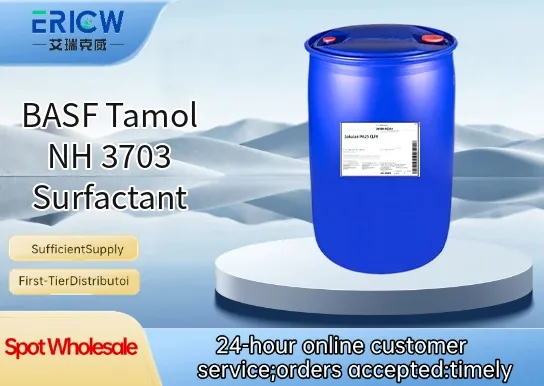
High-performance anionic dispersant based on naphthalene formaldehyde condensate (NFC) chemistry.
Excellent colloidal stability in high-solids, low-viscosity aqueous pigment dispersions.
Low foaming profile suitable for high-shear processing and industrial coating applications.
Good compatibility with a broad range of water-based resins including acrylics, vinyl acetate copolymers, and styrene-butadiene lattices.
Enables improved gloss, color strength, and storage stability in pigment concentrates and architectural coatings.
Architectural waterborne paints and interior/exterior emulsion paints.
Pigment concentrates (colorants) for decorative and industrial coatings.
Industrial maintenance coatings and protective coatings systems.
Water-based inks for packaging and publication gravure/flexo applications.
Cementitious and gypsum-based building materials requiring dispersion stability.
| Chemical Type | Naphthalene formaldehyde condensate sodium salt (anionic) |
| Product Form | Aqueous solution (~38–42% active content) |
| Appearance | Light to pale amber, clear to slightly hazy liquid |
| pH (1% aqueous solution) | 7.5 – 9.0 |
| Density (20°C) | ~1.12 – 1.16 g/cm³ |
| Solubility | Completely miscible with water; compatible with common co-solvents (e.g., glycols, ethanol) |
| Primary Applications | Dispersant/stabilizer for inorganic pigments (TiO₂, carbon black, iron oxides) in waterborne systems |
| Key Features | Low VOC, non-alkylphenol ethoxylate (APEO)-free, REACH-compliant |
Q1: What is the primary function of Tamol NH 3703 in industrial formulations?
A: Tamol NH 3703 is a sodium naphthalene formaldehyde condensate surfactant designed primarily as a dispersing agent and rheology modifier. It helps stabilize pigment and filler suspensions in aqueous systems by providing electrostatic repulsion and steric hindrance, thereby improving grind efficiency, storage stability, and application performance.
Q2: In which types of formulations is Tamol NH 3703 most commonly used?
A: It is widely employed in water-based industrial coatings, architectural paints, construction mortars, ceramic tile adhesives, and pigment concentrates. Its compatibility with high-ionic-strength environments and resistance to calcium sensitivity make it especially suitable for cementitious and mineral-filled systems.
Q3: How does Tamol NH 3703 compare to other naphthalene sulfonate dispersants in terms of performance?
A: Tamol NH 3703 offers enhanced dispersion efficiency and improved viscosity control relative to standard linear naphthalene formaldehyde condensates, due to its optimized molecular weight distribution and substitution pattern. This often translates to better particle stabilization at lower dosage levels and improved flow behavior in high-solids formulations.
Q4: Is Tamol NH 3703 compatible with common co-additives such as defoamers, thickeners, or biocides?
A: Yes, Tamol NH 3703 generally exhibits good compatibility with non-ionic and anionic thickeners (e.g., HEC, associative thickeners), silicone and mineral oil-based defoamers, and broad-spectrum biocides. However, compatibility should always be verified experimentally within the final formulation, particularly when cationic additives are present.
Q5: What is the recommended handling and storage guidance for Tamol NH 3703?
A: Store in original sealed containers in a cool, dry, well-ventilated area away from direct sunlight and strong oxidizing agents. The product is supplied as an aqueous solution and may crystallize at low temperatures; gentle warming to room temperature with mild agitation restores full functionality without degradation.
Contact With Us:
E-mail: wangxingqiang@ericwchem.com
Have a Questions? Call Us:
Add:
Building A1, Jiete Industrial Park, Huangpu District, Guangzhou City, Guangdong Province, China