English
 Español
 tiếng việt
 русский
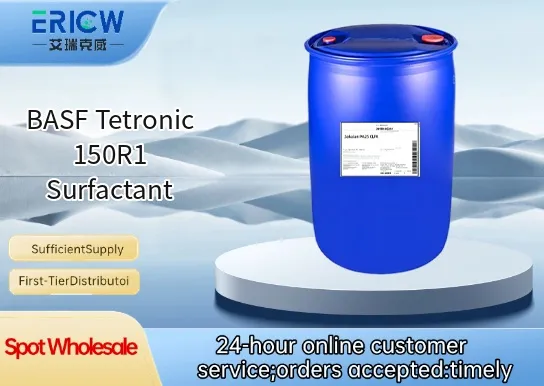
Non-ionic, thermoresponsive Pluronic®-type triblock copolymer (PEO-PPO-PEO) with reverse thermal gelation behavior.
Excellent solubilizing and stabilizing performance for hydrophobic actives in aqueous systems.
Low cytotoxicity and favorable safety profile suitable for personal care and pharmaceutical formulations.
High purity grade with consistent batch-to-batch reproducibility for regulated applications.
Biodegradable under aerobic conditions and compliant with OECD 301B screening guidelines.
Topical drug delivery systems, including gels, creams, and micellar solutions.
Stabilizer for nanoemulsions and microemulsions in cosmetic and dermocosmetic products.
Viscosity modifier and cold-gelling agent in rinse-off and leave-on personal care formulations.
Solubilizer for poorly water-soluble APIs and fragrances in OTC and prescription products.
Excipient in ophthalmic solutions and nasal sprays due to low ocular and mucosal irritation potential.
| Chemical Type | Non-ionic triblock copolymer (PEO₉₈–PPO₆₇–PEO₉₈) |
| Product Form | White to off-white flake or granular solid |
| Appearance | Free-flowing, homogeneous particles |
| pH (1% aqueous solution, 25 °C) | 5.0 – 7.0 |
| Solubility | Freely soluble in water; soluble in ethanol, propylene glycol, and glycerin |
| Cloud Point (1% aqueous solution) | ~28–32 °C |
| Assay (by HPLC) | ≥ 98.0% |
| Heavy Metals (as Pb) | ≤ 10 ppm |
Q1: What is the primary functional role of Tetronic 150R1 in formulations?
A: Tetronic 150R1 is a thermoresponsive, nonionic triblock copolymer surfactant that functions primarily as an emulsifier, solubilizer, and stabilizer—especially in aqueous systems where reversible micellization or temperature-triggered phase behavior is beneficial.
Q2: Is Tetronic 150R1 suitable for use in personal care applications?
A: Yes—it is widely used in rinse-off and leave-on cosmetic formulations due to its mildness, low irritation potential, and ability to enhance solubilization of hydrophobic actives without compromising formulation clarity or stability.
Q3: How does temperature affect the performance of Tetronic 150R1?
A: As a thermosensitive Pluronic®-type polymer, Tetronic 150R1 exhibits a distinct cloud point and undergoes reversible self-assembly upon heating, enabling applications such as temperature-triggered release, viscosity modulation, or in situ gelation above its critical micellization temperature.
Q4: Can Tetronic 150R1 be blended with ionic surfactants?
A: Yes—Tetronic 150R1 generally shows good compatibility with anionic, cationic, and amphoteric surfactants, though interactions may influence micellar structure and solution rheology; compatibility should be verified empirically in the final formulation matrix.
Q5: What is the typical dosage range for Tetronic 150R1 in industrial applications?
A: Dosage depends on formulation requirements and desired functionality, but it is typically used at low concentrations—generally ranging from 0.1% to 2% by weight—in emulsions, dispersions, and solubilized systems.
Contact With Us:
E-mail: wangxingqiang@ericwchem.com
Have a Questions? Call Us:
Add:
Building A1, Jiete Industrial Park, Huangpu District, Guangzhou City, Guangdong Province, China