English
 Español
 tiếng việt
 русский
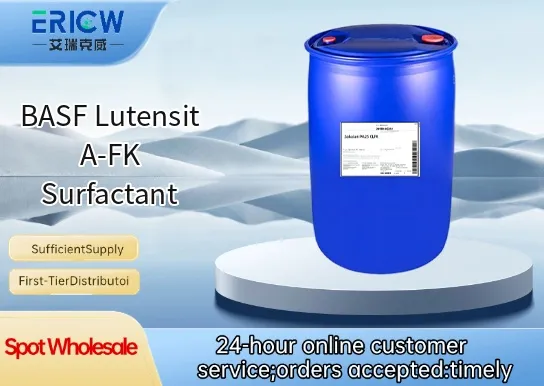
Highly effective anionic surfactant based on fatty alcohol ethoxysulfate (FAES) chemistry.
Excellent foaming performance with rich, stable, and creamy foam structure.
Superior detergency and grease-cutting capability under mild pH conditions.
Good compatibility with cationic, nonionic, and amphoteric surfactants in complex formulations.
Easily biodegradable and compliant with international environmental regulations including OECD 301 series.
Premium liquid hand soaps and body washes.
Shampoos and conditioning cleansers for sensitive scalp care.
High-performance dishwashing liquids for household and institutional use.
Industrial and institutional hard-surface cleaners.
Specialty textile pre-treatment and low-temperature washing formulations.
| Chemical Type | Fatty Alcohol Ethoxysulfate (FAES) |
| Product Form | Pale yellow to light amber viscous liquid |
| Appearance | Clear to slightly hazy, homogeneous liquid at 25°C |
| pH (10% aqueous solution) | 6.5 – 7.5 |
| Active Matter Content | ≈ 28 – 32 wt.% |
| Free Fatty Alcohol | < 1.5 wt.% |
| Sodium Sulfate Content | < 5.0 wt.% |
| Primary Applications | Personal care cleansing, household & industrial detergents |
Q1: What is the primary function of Lutensit A-FK in formulations?
A: Lutensit A-FK is a mild, amphoteric surfactant primarily used for its excellent foaming, foam stabilization, and viscosity-enhancing properties—especially in combination with anionic surfactants. It also contributes to skin compatibility and reduces irritation potential in personal care applications.
Q2: Is Lutensit A-FK suitable for sulfate-free or low-irritancy product lines?
A: Yes, it is widely selected for sulfate-free, gentle cleansing systems—including baby care, sensitive skin, and natural-leaning formulations—due to its inherent mildness, biodegradability, and ability to boost mildness when blended with stronger surfactants.
Q3: How does pH affect the performance and stability of Lutensit A-FK?
A: As an amphoteric surfactant, Lutensit A-FK exhibits pH-dependent charge behavior: it acts cationic under acidic conditions, zwitterionic near neutral pH, and anionic under alkaline conditions. Optimal foaming and compatibility are typically observed between pH 5.0 and 7.5; formulation pH should be controlled to maintain desired functional performance and physical stability.
Q4: Can Lutensit A-FK be used in rinse-off versus leave-on products?
A: It is most commonly applied in rinse-off products such as shampoos, body washes, and facial cleansers, where its foaming and sensory benefits are fully leveraged. While technically compatible with some leave-on systems, its performance profile and regulatory positioning are optimized for rinse-off use.
Q5: What are typical dosage guidelines for Lutensit A-FK in finished formulations?
A: Dosage depends on formulation goals and co-surfactant system, but it is generally used at low concentrations—typically ranging from 0.1% to 2% by weight—to achieve effective foam enhancement, viscosity control, and mildness improvement without compromising clarity or stability.
Contact With Us:
E-mail: wangxingqiang@ericwchem.com
Have a Questions? Call Us:
Add:
Building A1, Jiete Industrial Park, Huangpu District, Guangzhou City, Guangdong Province, China