English
 Español
 tiếng việt
 русский
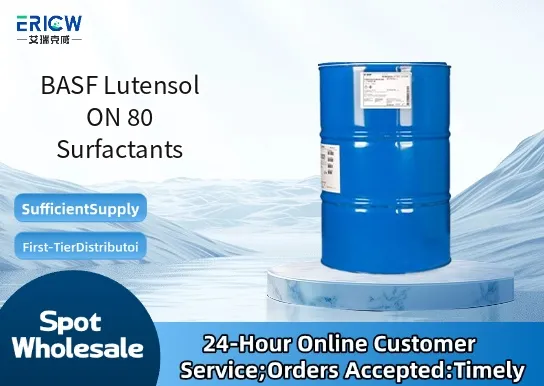
Nonionic surfactant based on ethoxylated linear primary alcohols with excellent wetting and emulsifying performance.
High foaming capacity combined with good foam stability in hard water conditions.
Outstanding low-temperature solubility and formulation compatibility with anionic and amphoteric surfactants.
Biodegradable under aerobic conditions, supporting sustainable product design requirements.
Low skin irritation potential, suitable for mild personal care and household cleaning applications.
Laundry detergents — as a primary builder and soil-suspending agent in powder and liquid formulations.
Hard surface cleaners — for enhanced grease removal and residue-free rinsing on glass, tile, and stainless steel.
Industrial metal cleaning — in alkaline degreasers for effective oil and coolant emulsification.
Agrochemical adjuvants — improving active ingredient dispersion and leaf surface coverage in spray solutions.
Personal care cleansers — as a mild foaming and solubilizing base in shampoos and body washes.
| Chemical Type | Nonionic: Alcohol Ethoxylate (C13–C15 linear, ~8 mol EO) |
| Product Form | Pale yellow to amber viscous liquid |
| Appearance | Clear to slightly hazy, homogeneous liquid at 25 °C |
| pH (1% aqueous solution) | 5.5–7.0 |
| Active Content | Approx. 80 wt.% (as supplied) |
| Cloud Point (1% solution) | ~65–70 °C |
| Solubility in Water | Complete miscibility at room temperature |
| Primary Applications | Household & industrial cleaners, agrochemicals, personal care |
Q1: What is the primary chemical nature of Lutensol ON 80?
A: Lutensol ON 80 is a nonionic surfactant based on linear alcohol ethoxylates, specifically derived from C13–C15 linear alcohols with an average of approximately 80 moles of ethylene oxide per molecule. Its high EO content imparts excellent water solubility, low foaming characteristics, and good compatibility with electrolytes.
Q2: In which industrial cleaning applications is Lutensol ON 80 most commonly used?
A: It is widely employed in heavy-duty industrial and institutional cleaners—especially alkaline formulations for metal parts cleaning, floor maintenance products, and spray-and-wipe solutions—where high emulsification capacity, soil suspension stability, and tolerance to hard water and elevated temperatures are required.
Q3: How does Lutensol ON 80 perform in high-pH or high-temperature environments?
A: Due to its nonionic structure and high ethoxylation degree, Lutensol ON 80 exhibits exceptional stability under strongly alkaline conditions (pH up to 14) and at elevated temperatures (up to 90 °C), making it suitable for boil-out formulations and hot alkaline cleaning processes without significant hydrolysis or loss of performance.
Q4: Is Lutensol ON 80 compatible with anionic and cationic surfactants?
A: It shows good physical and functional compatibility with many anionic surfactants (e.g., LAS, AES) in formulated systems, enabling synergistic detergency. Compatibility with cationic species is generally limited and should be evaluated case-by-case, as interactions may lead to precipitation or reduced efficacy in certain pH or concentration ranges.
Q5: What is the typical dosage range for Lutensol ON 80 in cleaning concentrates?
A: Dosage depends on formulation requirements and desired performance, but it is typically used at low concentrations—generally ranging from 0.1% to 2% by weight in ready-to-use or diluted cleaning solutions, and up to 5–10% in concentrated industrial formulations where high emulsification and soil suspension are critical.
Contact With Us:
E-mail: wangxingqiang@ericwchem.com
Have a Questions? Call Us:
Add:
Building A1, Jiete Industrial Park, Huangpu District, Guangzhou City, Guangdong Province, China