English
 Español
 tiếng việt
 русский
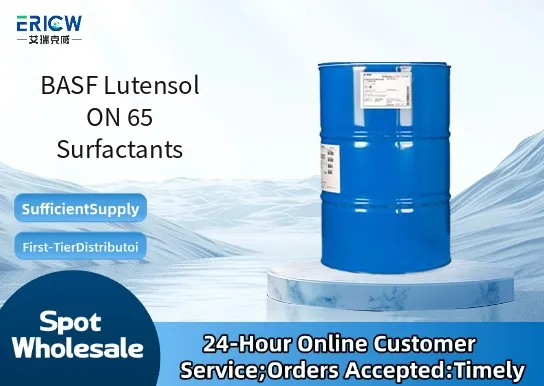
Nonionic surfactant based on ethoxylated linear primary alcohols with optimized hydrophilic-lipophilic balance (HLB ≈ 13.5).
Excellent wetting, emulsifying, and solubilizing performance in both hard and soft water.
Low foaming profile suitable for high-shear industrial cleaning and metalworking applications.
Good thermal and pH stability across a broad range (pH 4–12), supporting formulation robustness.
Readily biodegradable (OECD 301E compliant), aligning with sustainable industrial chemistry requirements.
Industrial and institutional (I&I) hard-surface cleaners, including floor, glass, and stainless-steel formulations.
Metal cleaning and degreasing agents for automotive and aerospace manufacturing processes.
Emulsion polymerization aids in acrylic and styrene-butadiene latex production.
Agrochemical adjuvants enhancing pesticide solubilization and foliar spread.
Textile auxiliaries for scouring, dye leveling, and low-foam rinsing operations.
| Chemical Type | Nonionic — Ethoxylated linear primary alcohol (C13–C15, ~6.5 mol EO) |
| Product Form | Liquid |
| Appearance | Pale yellow to colorless, clear to slightly hazy liquid at 20 °C |
| Active Content | ≈ 100 wt-% (neat) |
| Cloud Point (1% aqueous solution) | ≈ 72–76 °C |
| pH (1% aqueous solution, 20 °C) | 5.5–7.0 |
| Density (20 °C) | ≈ 0.99–1.01 g/cm³ |
| Viscosity (20 °C) | ≈ 150–300 mPa·s |
Q1: What is the primary chemical nature of Lutensol ON 65?
A: Lutensol ON 65 is a nonionic surfactant based on ethoxylated octylphenol, featuring a hydrophobic octylphenol core and a hydrophilic polyethylene oxide chain with an average of approximately 6.5 ethylene oxide units.
Q2: In which types of industrial cleaning formulations is Lutensol ON 65 most commonly applied?
A: It is widely used in alkaline and neutral-pH industrial cleaning agents—particularly for metal parts cleaning, textile auxiliaries, and emulsion polymerization systems—where good wetting, soil suspension, and compatibility with electrolytes are required.
Q3: How does temperature affect the performance of Lutensol ON 65 in aqueous solutions?
A: As a low-EO nonionic surfactant, Lutensol ON 65 exhibits relatively low cloud point behavior; its solubility decreases gradually above 40–50 °C, making it especially suitable for warm-process applications where controlled phase separation or coalescence is beneficial.
Q4: Is Lutensol ON 65 compatible with anionic and cationic surfactants?
A: It shows good physical compatibility with many anionic surfactants (e.g., LAS, AES) in formulated systems, though strong ionic interactions may occur with certain cationic species—compatibility should be verified experimentally under intended use conditions.
Q5: What are key handling and storage recommendations for Lutensol ON 65?
A: Store in original sealed containers at temperatures between 5 °C and 30 °C, protected from direct sunlight and moisture ingress; avoid prolonged exposure to freezing conditions, as crystallization may occur and require gentle warming to redissolve without degradation.
Contact With Us:
E-mail: wangxingqiang@ericwchem.com
Have a Questions? Call Us:
Add:
Building A1, Jiete Industrial Park, Huangpu District, Guangzhou City, Guangdong Province, China