English
 Español
 tiếng việt
 русский
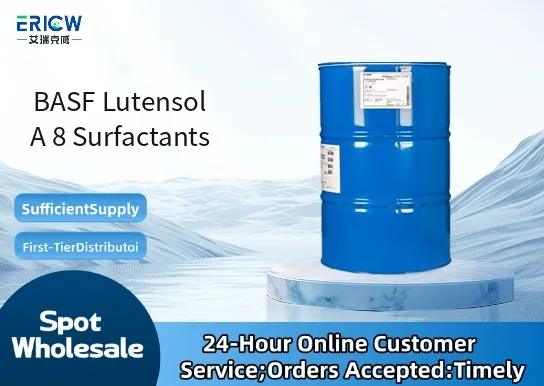
Nonionic alcohol ethoxylate with balanced hydrophilic-lipophilic balance (HLB ≈ 13.5) for optimal emulsification and solubilization.
Excellent low-temperature stability and clarity in aqueous solutions, enabling reliable performance in cold-process formulations.
Low foaming profile suitable for high-shear and industrial cleaning applications where foam control is critical.
Biodegradable under OECD 301 standard conditions, supporting sustainable formulation goals.
Good compatibility with electrolytes, acids, and common anionic and cationic surfactants in multi-component systems.
Industrial and institutional cleaners, including hard-surface degreasers and floor maintenance products.
Agrochemical adjuvants for enhancing active ingredient dispersion and foliar uptake in pesticide formulations.
Textile auxiliaries such as scouring and dyeing assistants in cotton and polyester processing.
Paint and coating additives for pigment wetting, stabilization, and gloss enhancement in waterborne systems.
Personal care emulsifiers in mild rinse-off products like shampoos and body washes (at appropriate use levels).
| Chemical Type | Linear primary alcohol ethoxylate (C13–C15, avg. 8 EO units) |
| Product Form | Liquid |
| Appearance | Pale yellow to colorless, clear liquid |
| pH (1% aqueous solution, 20 °C) | 5.5 – 7.0 |
| Cloud Point (1% aqueous solution) | 65 – 72 °C |
| Active Content | 99.0 – 101.0 wt.% |
| Density (20 °C) | 0.99 – 1.02 g/cm³ |
| Viscosity (20 °C) | 200 – 400 mPa·s |
Q1: What is the primary chemical nature of Lutensol A 8?
A: Lutensol A 8 is a nonionic surfactant based on alcohol ethoxylate chemistry, specifically derived from linear C12–C15 fatty alcohols with an average of approximately 8 moles of ethylene oxide per molecule.
Q2: In which types of industrial cleaning formulations is Lutensol A 8 commonly used?
A: It is widely employed in low-foaming, high-efficiency aqueous cleaning systems—such as metalworking fluids, industrial degreasers, and hard-surface cleaners—where good soil removal, water solubility, and compatibility with other formulation components are required.
Q3: How does temperature affect the performance of Lutensol A 8 in formulations?
A: As a typical A-series ethoxylate, Lutensol A 8 exhibits a distinct cloud point behavior—its solubility decreases gradually above its cloud point temperature, which supports temperature-triggered phase separation in certain cleaning or demulsification applications.
Q4: Is Lutensol A 8 compatible with common anionic and cationic surfactants?
A: It demonstrates broad compatibility with many anionic surfactants (e.g., LAS, AES) and selected cationic systems under neutral to mildly alkaline conditions; however, compatibility testing is recommended for specific formulations due to potential micellar interactions or precipitation risks at extreme pH or high electrolyte concentrations.
Q5: What guidance can be provided on handling and storage?
A: Store in tightly sealed containers in a cool, dry, well-ventilated area away from direct sunlight and strong oxidizing agents; it is stable under recommended storage conditions but may undergo gradual oxidative degradation if exposed to prolonged heat or air over extended periods.
Contact With Us:
E-mail: wangxingqiang@ericwchem.com
Have a Questions? Call Us:
Add:
Building A1, Jiete Industrial Park, Huangpu District, Guangzhou City, Guangdong Province, China