English
 Español
 tiếng việt
 русский
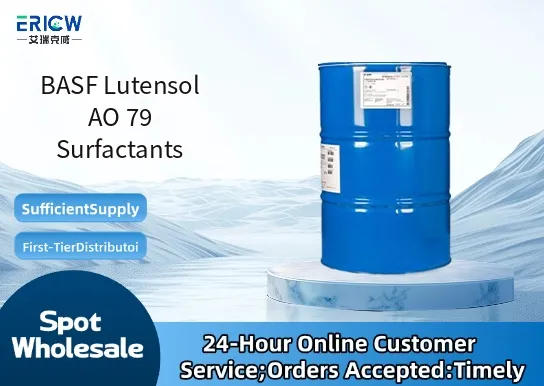
Nonionic alcohol ethoxylate with high hydrophilic-lipophilic balance (HLB ≈ 13.5) for excellent water solubility and low-temperature stability.
Outstanding emulsifying and solubilizing performance in aqueous systems, especially for hydrophobic actives and oils.
Low foaming profile suitable for high-shear industrial cleaning and rinse-efficient formulations.
Good compatibility with anionic, cationic, and amphoteric surfactants across broad pH ranges (pH 4–12).
Eco-preferred profile: readily biodegradable (OECD 301B compliant) and free of alkylphenol ethoxylates (APEO-free).
Industrial and institutional (I&I) hard-surface cleaners, including floor, glass, and stainless-steel cleaners.
Agrochemical formulations — emulsifiable concentrates (EC), suspension concentrates (SC), and microemulsions (ME).
Textile auxiliaries — scouring agents, dye dispersants, and leveling agents for polyester and blends.
Paint and coating additives — pigment wetting, defoaming aid, and co-emulsifier in acrylic and styrene-butadiene dispersions.
Personal care cleansing bases — mild co-surfactant in sulfate-free shampoos and body washes.
| Chemical Type | Linear alcohol ethoxylate (C13–C15, avg. 9.5 EO units) |
| Product Form | Clear to slightly opalescent viscous liquid |
| Appearance | Pale yellow to colorless, homogeneous liquid at 25 °C |
| pH (1% aqueous solution) | 5.5 – 7.0 |
| Active Content | ≥ 98.5 wt.% |
| Cloud Point (1% aqueous solution) | ≈ 68 °C |
| HLB Value | ≈ 13.5 |
| Primary Applications | Emulsification, solubilization, wetting, and dispersion in industrial and specialty formulations |
Q1: What is the primary chemical nature of Lutensol AO 79?
A: Lutensol AO 79 is a nonionic surfactant based on alkoxylated linear alcohols, specifically derived from C12–15 fatty alcohols ethoxylated with approximately 7–9 moles of propylene oxide and ~70–80 moles of ethylene oxide. Its high EO content imparts excellent water solubility and low foaming characteristics.
Q2: In which types of industrial cleaning formulations is Lutensol AO 79 most commonly applied?
A: It is widely used in low-foaming, high-efficiency aqueous cleaning systems—especially in metalworking fluids, industrial laundry detergents, and hard-surface cleaners where persistent foam must be avoided and soil removal under moderate to high temperatures is required.
Q3: How does Lutensol AO 79 perform in hard water conditions?
A: As a nonionic surfactant, Lutensol AO 79 maintains good stability and performance in the presence of calcium and magnesium ions, making it suitable for use in moderately hard water without significant loss of detergency or cloud point shift.
Q4: Is Lutensol AO 79 compatible with anionic and cationic surfactants?
A: It exhibits broad compatibility with many anionic surfactants (e.g., LAS, AES) and can be formulated alongside certain cationic species in carefully balanced systems; however, direct blending with strongly cationic materials may require compatibility testing due to potential micellar interactions or phase separation.
Q5: What are typical dosage recommendations for Lutensol AO 79 in cleaning concentrates?
A: Dosage depends on formulation requirements and application intensity, but it is typically used at low concentrations—generally ranging from 0.1% to 2% by weight in ready-to-use solutions—and often serves as a co-surfactant or hydrotrope to enhance solubilization and reduce overall surfactant load.
Contact With Us:
E-mail: wangxingqiang@ericwchem.com
Have a Questions? Call Us:
Add:
Building A1, Jiete Industrial Park, Huangpu District, Guangzhou City, Guangdong Province, China