English
 Español
 tiếng việt
 русский
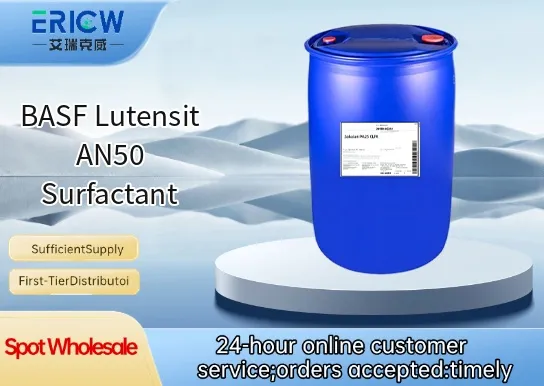
Highly effective anionic surfactant based on alkyl naphthalene sulfonates with excellent wetting and dispersing performance.
Outstanding thermal and electrolyte stability, suitable for demanding industrial formulation conditions.
Low foaming profile—ideal for applications requiring controlled foam generation.
Good compatibility with a broad range of ionic and nonionic surfactants, polymers, and active ingredients.
Eco-efficient profile with favorable biodegradability characteristics under OECD 301 test guidelines.
Agrochemical formulations—including suspension concentrates (SC), emulsifiable concentrates (EC), and wettable granules (WG).
Industrial cleaning agents for metal parts, equipment, and hard surfaces.
Textile auxiliaries such as dye dispersants and leveling agents in pigment printing.
Water-based coatings and inks requiring stable pigment dispersion and substrate wetting.
Oilfield chemicals, including drilling fluid additives and enhanced oil recovery (EOR) formulations.
| Chemical Type | Alkyl naphthalene sulfonate (ANS) |
| Product Form | Aqueous solution (~50% active content) |
| Appearance | Clear to slightly hazy, light amber liquid |
| pH (1% aqueous solution, 20°C) | 6.5 – 8.5 |
| Density (20°C) | 1.12 – 1.16 g/cm³ |
| Solubility | Completely miscible with water; compatible with common polar organic solvents |
| Primary Applications | Wetting agent, dispersant, and stabilizer in technical formulations |
| Key Features | Low foaming, high electrolyte tolerance, thermally robust |
Q1: What is the primary function of Lutensit AN50 in formulations?
A: Lutensit AN50 is an amphoteric surfactant designed to provide mild cleansing, foam stabilization, and viscosity enhancement—particularly in aqueous personal care systems such as shampoos, body washes, and facial cleansers.
Q2: Is Lutensit AN50 compatible with anionic and cationic ingredients?
A: Yes, due to its amphoteric nature, Lutensit AN50 exhibits broad compatibility across ionic classes—including anionics (e.g., SLS, SLES), nonionics, and select cationics—making it suitable for complex, multi-surfactant systems without significant precipitation or instability.
Q3: How does pH affect the performance and stability of Lutensit AN50?
A: Lutensit AN50 performs optimally in mildly acidic to neutral pH ranges (approximately pH 4.5–7.0), where its zwitterionic character supports effective surface activity and solubility. Performance may diminish under strongly alkaline conditions due to charge imbalance.
Q4: Can Lutensit AN50 be used in rinse-off versus leave-on applications?
A: It is primarily formulated for rinse-off products such as shampoos and body washes, where its mildness, foaming synergy, and biodegradability align with regulatory and consumer expectations. While not prohibited in leave-on systems, formulation compatibility and sensory performance should be verified case by case.
Q5: What are typical dosage recommendations for Lutensit AN50 in surfactant blends?
A: Dosage depends on formulation requirements, but it is typically used at low concentrations—generally ranging from 0.1% to 2% by weight—to optimize foam quality, mildness, and viscosity without compromising clarity or stability.
Contact With Us:
E-mail: wangxingqiang@ericwchem.com
Have a Questions? Call Us:
Add:
Building A1, Jiete Industrial Park, Huangpu District, Guangzhou City, Guangdong Province, China