English
 Español
 tiếng việt
 русский
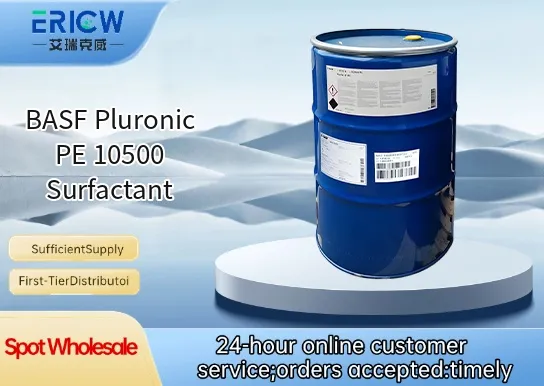
Nonionic triblock copolymer based on poly(ethylene oxide)-poly(propylene oxide)-poly(ethylene oxide) (PEO-PPO-PEO) architecture.
High molecular weight (approx. 10,500 g/mol) offering enhanced steric stabilization and viscosity-modifying capability.
Excellent water solubility with low foaming characteristics in aqueous systems across a broad pH range.
Thermoresponsive behavior with well-defined cloud point, enabling controlled phase separation in temperature-triggered applications.
Low toxicity profile and compliance with major regulatory frameworks for industrial and pharmaceutical excipient use.
Stabilizer and solubilizer in pharmaceutical formulations, including injectables and oral suspensions.
Rheology modifier and emulsifier in high-performance industrial coatings and architectural paints.
Dispersant for carbon nanotubes and graphene in advanced composite processing.
Templating agent in the synthesis of mesoporous silica and metal oxide nanoparticles.
Component in cold-water soluble detergent systems for institutional and industrial cleaning products.
| Chemical Type | Nonionic PEO-PPO-PEO triblock copolymer |
| Product Form | White to off-white flake or granular solid |
| Appearance | Free-flowing, hygroscopic solid at room temperature |
| Primary Applications | Pharmaceutical excipient, industrial dispersant, nanomaterial template, coating additive |
| Key Features | High MW steric stabilizer, thermoresponsive, low foaming, water-soluble |
| Benefits | Improved colloidal stability, enhanced solubilization capacity, reduced formulation viscosity hysteresis |
| pH (1% aqueous solution) | 5.0 – 7.0 |
| Storage Conditions | Store in original container at 15–25°C, protect from moisture |
Q1: What is the primary chemical structure and classification of Pluronic PE 10500?
A: Pluronic PE 10500 is a nonionic triblock copolymer composed of a central hydrophobic polypropylene oxide (PPO) segment flanked by two hydrophilic polyethylene oxide (PEO) chains. It belongs to the Pluronic® family of polyether surfactants and exhibits amphiphilic character suitable for stabilization, solubilization, and emulsification in aqueous systems.
Q2: In which types of industrial formulations is Pluronic PE 10500 commonly used?
A: This grade is frequently employed in high-performance industrial cleaning formulations, agrochemical adjuvants, pharmaceutical suspensions, and specialty coatings where thermal stability, low foaming, and robust interfacial activity are required. Its relatively high molecular weight supports viscosity modification and long-term colloidal stability.
Q3: How does Pluronic PE 10500 differ from lower-molecular-weight Pluronics like L44 or F68?
A: Compared to lower-MW grades, PE 10500 offers greater hydrophobicity and enhanced surface activity at elevated temperatures, along with improved film-forming capability and reduced critical micelle concentration (CMC). It also provides stronger steric stabilization in dispersed systems due to its extended PEO chain length and overall size.
Q4: Is Pluronic PE 10500 compatible with common electrolytes and acidic or basic media?
A: Yes — as a nonionic surfactant, PE 10500 maintains performance across a broad pH range and demonstrates good tolerance to moderate concentrations of salts. However, extreme ionic strength or highly aggressive oxidizing conditions may affect long-term stability and should be evaluated case by case in the target formulation.
Contact With Us:
E-mail: wangxingqiang@ericwchem.com
Have a Questions? Call Us:
Add:
Building A1, Jiete Industrial Park, Huangpu District, Guangzhou City, Guangdong Province, China