English
 Español
 tiếng việt
 русский
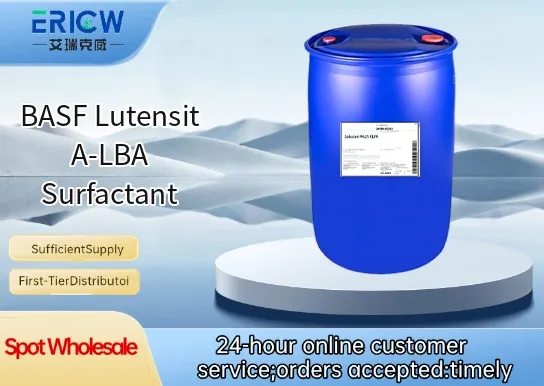
Highly effective amphoteric surfactant based on lauramidopropyl betaine chemistry.
Excellent foaming and foam-stabilizing properties, even in hard water and at low temperatures.
Mild to skin and eyes, making it ideal for personal care formulations requiring gentle cleansing.
Outstanding compatibility with anionic, cationic, nonionic, and amphoteric surfactants.
Enhances viscosity and stabilizes emulsions in aqueous systems without compromising clarity.
Shampoos and conditioning shampoos for improved lather volume and sensory feel.
Body washes and liquid soaps where mildness and rich foam are critical performance attributes.
Facial cleansers and baby care products requiring high tolerability and low irritation potential.
Hand soaps and antimicrobial wash formulations leveraging synergistic efficacy with preservatives.
| Chemical Type | Lauramidopropyl Betaine (Amphoteric) |
| Product Form | Clear to slightly opalescent viscous liquid |
| Appearance | Pale yellow to colorless liquid |
| pH (10% aqueous solution) | 5.0 – 7.0 |
| Active Content (as supplied) | ≥ 30.0 wt-% |
| Sodium Chloride Content | ≤ 8.0 wt-% |
| Density (at 20 °C) | 1.03 – 1.07 g/cm³ |
| Solubility | Completely miscible with water |
Q1: What is the primary function of Lutensit A-LBA in formulations?
A: Lutensit A-LBA is an amphoteric surfactant designed to provide mild cleansing, foam stabilization, and viscosity enhancement—particularly in aqueous personal care systems such as shampoos, body washes, and facial cleansers.
Q2: Is Lutensit A-LBA compatible with anionic surfactants like SLS or SLES?
A: Yes, it exhibits excellent compatibility with common anionic surfactants and is frequently used to boost foam volume, improve foam creaminess, and reduce skin irritation potential in mixed-surfactant systems.
Q3: How does pH affect the performance and stability of Lutensit A-LBA?
A: As an amphoteric surfactant, Lutensit A-LBA demonstrates pH-dependent charge behavior—acting cationic under acidic conditions, zwitterionic near neutral pH, and weakly anionic at higher pH. It remains stable and effective across a broad pH range (approximately 4–9) typical for rinse-off products.
Q4: Can Lutensit A-LBA be used in leave-on cosmetic applications?
A: While primarily formulated for rinse-off systems, Lutensit A-LBA may be considered for certain leave-on applications where mildness and conditioning are desired—subject to full safety evaluation and compatibility testing within the final formulation matrix.
Q5: What is the typical dosage range for Lutensit A-LBA in finished products?
A: Dosage depends on formulation goals and system composition, but it is typically used at low concentrations—generally ranging from 0.1% to 2% by weight—to achieve desired foaming, viscosity, and sensory effects without compromising clarity or stability.
Contact With Us:
E-mail: wangxingqiang@ericwchem.com
Have a Questions? Call Us:
Add:
Building A1, Jiete Industrial Park, Huangpu District, Guangzhou City, Guangdong Province, China