English
 Español
 tiếng việt
 русский
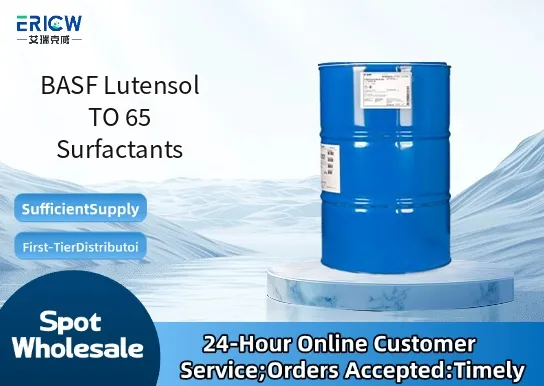
Nonionic surfactant based on linear alcohol ethoxylate with optimized hydrophilic-lipophilic balance (HLB ≈ 13.5) for balanced emulsification and detergency.
Excellent low-temperature stability and clarity in aqueous solutions, enabling reliable performance in cold-process formulations.
Low foaming profile suitable for high-shear industrial cleaning and metalworking applications where foam control is critical.
Good compatibility with anionic, cationic, and amphoteric surfactants, facilitating versatile formulation design.
Eco-preferred profile with readily biodegradable ethoxylate backbone and no APEO residues, supporting sustainable product stewardship.
Industrial and institutional (I&I) hard-surface cleaners, including floor, glass, and stainless-steel cleaners.
Metalworking fluids—especially semi-synthetic and soluble oil concentrates requiring stable emulsions and corrosion inhibition.
Agrochemical adjuvants for enhancing spray droplet spreading, retention, and active ingredient uptake.
Textile auxiliaries such as scouring and dyeing assistants in cotton and polyester processing.
Paint and coating additives for pigment wetting, dispersion stabilization, and gloss enhancement in waterborne systems.
| Chemical Type | Linear alcohol ethoxylate (C13–C15, avg. 6.5 EO units) |
| Product Form | Liquid |
| Appearance | Pale yellow to colorless, clear liquid at 25 °C |
| HLB Value | ≈ 13.5 |
| pH (1% aqueous solution, 25 °C) | 5.5 – 7.0 |
| Cloud Point (1% aqueous solution) | ≈ 62 – 66 °C |
| Active Content (wt %) | ≥ 98.0% |
| Saponification Value (mg KOH/g) | 45 – 52 |
Q1: What is the primary function of Lutensol TO 65 in industrial formulations?
A: Lutensol TO 65 is a nonionic surfactant based on linear alcohol ethoxylates, primarily used for its excellent wetting, emulsifying, and solubilizing properties in aqueous systems—especially where low foaming and good compatibility with electrolytes are required.
Q2: Is Lutensol TO 65 suitable for use in low-temperature applications?
A: Yes, due to its relatively low cloud point and good water solubility at ambient and moderately reduced temperatures, Lutensol TO 65 performs effectively in formulations designed for cold-water operation or seasonal storage conditions.
Q3: How does Lutensol TO 65 compare to other Lutensol TO grades in terms of hydrophilicity and application scope?
A: As a mid-range ethoxylate (TO 65 denotes approximately 6.5 moles of ethylene oxide), it offers a balanced HLB profile—more hydrophilic than TO 5 but less than TO 7—making it especially versatile for emulsion polymerization, agrochemical concentrates, and metalworking fluid additives where moderate water affinity and oil compatibility are both needed.
Q4: Can Lutensol TO 65 be used in combination with anionic surfactants?
A: Yes, Lutensol TO 65 is generally compatible with common anionic surfactants such as alkylbenzene sulfonates or alkyl sulfates, enabling synergistic performance in detergency and emulsion stabilization—though compatibility should always be verified experimentally under specific formulation conditions.
Q5: What handling and storage recommendations apply to Lutensol TO 65?
A: Store in original sealed containers at temperatures between 5 °C and 30 °C, away from direct sunlight and strong oxidizing agents. The product is stable under recommended conditions, but prolonged exposure to high temperatures or freezing may affect viscosity and phase behavior.
Contact With Us:
E-mail: wangxingqiang@ericwchem.com
Have a Questions? Call Us:
Add:
Building A1, Jiete Industrial Park, Huangpu District, Guangzhou City, Guangdong Province, China