English
 Español
 tiếng việt
 русский
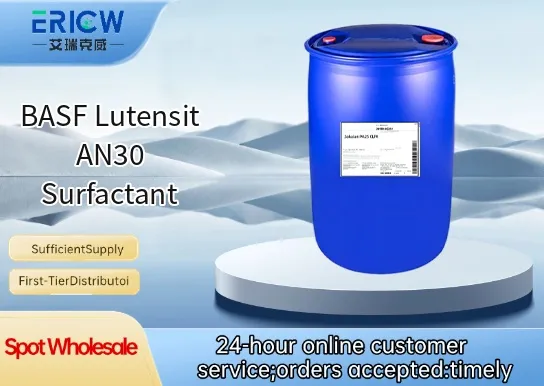
Highly effective anionic surfactant based on alkyl naphthalene sulfonates with excellent wetting and dispersing properties.
Outstanding thermal and electrolyte stability, enabling robust performance in demanding industrial formulations.
Low foaming profile—ideal for applications where foam control is critical, such as cleaning-in-place (CIP) systems.
Good compatibility with other anionic, nonionic, and cationic surfactants, facilitating versatile formulation design.
Eco-preferred profile: readily biodegradable under aerobic conditions and compliant with OECD 301B testing guidelines.
Industrial and institutional (I&I) hard-surface cleaners, including floor, glass, and stainless-steel cleaners.
Agrochemical adjuvants for enhancing pesticide dispersion, suspension stability, and foliar coverage.
Oilfield chemicals—used in drilling fluid additives, emulsion breakers, and pipeline cleaning formulations.
Textile auxiliaries, particularly as a leveling agent and dispersing aid in dyeing and printing processes.
Paint and coating additives to improve pigment wetting, stabilization, and rheology control in water-based systems.
| Chemical Type | Alkyl naphthalene sulfonate (ANS) |
| Product Form | Aqueous solution (~30% active content) |
| Appearance | Clear to slightly hazy, light amber liquid |
| pH (1% aqueous solution, 20°C) | 6.5 – 8.5 |
| Density (20°C) | 1.08 – 1.12 g/cm³ |
| Solubility | Completely miscible with water; soluble in polar organic solvents |
| Primary Applications | Wetting agent, dispersant, emulsifier, stabilizer |
| Key Features | Low foam, high electrolyte tolerance, good biodegradability |
Q1: What is the primary function of Lutensit AN30 in formulations?
A: Lutensit AN30 is an amphoteric surfactant designed to provide mild cleansing, foam stabilization, and viscosity enhancement—particularly in aqueous personal care systems such as shampoos, body washes, and facial cleansers. Its zwitterionic nature contributes to compatibility with anionic, cationic, and nonionic ingredients.
Q2: Is Lutensit AN30 suitable for sulfate-free or low-irritancy formulations?
A: Yes—Lutensit AN30 is widely selected for sulfate-free and mildness-optimized systems due to its low potential for skin and eye irritation, good biodegradability profile, and ability to boost foam quality without harsh detergency.
Q3: How does pH affect the performance and stability of Lutensit AN30?
A: As an amphoteric surfactant, Lutensit AN30 exhibits pH-dependent charge behavior: it acts predominantly as a cation at low pH (<5), as a zwitterion near neutral pH (5–7), and with increasing anionic character above pH 8. Optimal foaming and compatibility are typically observed between pH 5.5 and 7.5.
Q4: Can Lutensit AN30 be used in combination with common thickeners like sodium chloride or carbomers?
A: Yes—Lutensit AN30 generally shows good synergy with electrolyte-based thickeners (e.g., NaCl) and polymeric thickeners (e.g., carbomers, acrylates copolymers), supporting viscosity development and rheological control across a broad formulation pH range.
Contact With Us:
E-mail: wangxingqiang@ericwchem.com
Have a Questions? Call Us:
Add:
Building A1, Jiete Industrial Park, Huangpu District, Guangzhou City, Guangdong Province, China