English
 Español
 tiếng việt
 русский
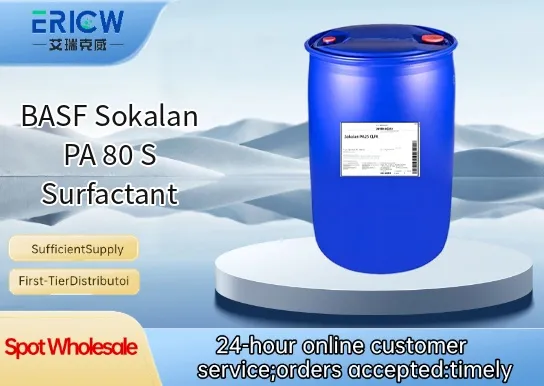
Highly effective polyacrylate-based dispersant with strong stabilization of inorganic pigments and fillers.
Excellent compatibility with waterborne acrylic, styrene-acrylic, and vinyl acetate-based polymer dispersions.
Low foaming profile suitable for high-shear industrial coating and ink manufacturing processes.
Enables improved gloss, color strength, and long-term storage stability in pigment concentrates.
Non-ionic character ensures broad formulation flexibility and minimal impact on system viscosity.
Architectural waterborne paints and interior/exterior wall coatings.
Pigment dispersions for industrial maintenance coatings.
Water-based printing inks, especially for flexographic and gravure applications.
Construction chemicals including tile adhesives and cementitious renders.
Wood coatings requiring high pigment loading and low haze.
| Chemical Type | Polyacrylic acid sodium salt (anionic polymeric dispersant) |
| Product Form | Aqueous solution (~40% active content) |
| Appearance | Clear to slightly opalescent, low-viscosity liquid |
| pH (1% aqueous solution) | 7.5 – 9.0 |
| Density (20 °C) | ~1.08 – 1.12 g/cm³ |
| Solubility | Completely miscible with water; compatible with common co-solvents (e.g., glycols, ethanol) |
| Primary Applications | Pigment dispersion stabilization in waterborne coatings, inks, and construction systems |
| Key Features | Low foam, high electrolyte tolerance, shear-stable performance |
Q1: What is the primary function of Sokalan PA 80 S in industrial formulations?
A: Sokalan PA 80 S is a polyacrylate-based polyelectrolyte surfactant designed primarily to provide effective dispersion stabilization and rheology modification in aqueous systems. It helps prevent particle agglomeration, improves pigment wetting, and contributes to long-term suspension stability—especially in high-solids or low-VOC coatings, construction mortars, and ceramic slurries.
Q2: Is Sokalan PA 80 S compatible with common biocides and other additives used in waterborne systems?
A: Yes, Sokalan PA 80 S generally exhibits good compatibility with a broad range of preservatives, defoamers, thickeners, and co-dispersants commonly employed in architectural and industrial waterborne formulations. However, compatibility should always be verified experimentally under actual formulation conditions due to potential interactions with cationic species or highly acidic media.
Q3: How does Sokalan PA 80 S differ from conventional anionic surfactants like alkyl sulfates or alkyl ethoxysulfates?
A: Unlike small-molecule anionic surfactants, Sokalan PA 80 S is a high-molecular-weight polyelectrolyte that functions through steric and electrostatic stabilization mechanisms rather than micelle formation. This provides superior colloidal stability under shear, elevated electrolyte concentrations, and extended storage conditions—making it particularly suitable for demanding industrial applications where robustness is critical.
Q4: What is the typical dosage range for Sokalan PA 80 S in coating formulations?
A: Dosage depends on formulation requirements, pigment type, solids content, and desired performance profile. It is typically used at low concentrations—generally ranging from 0.1% to 2% by weight relative to total formulation—and is often added during the grind phase to maximize dispersion efficiency.
Contact With Us:
E-mail: wangxingqiang@ericwchem.com
Have a Questions? Call Us:
Add:
Building A1, Jiete Industrial Park, Huangpu District, Guangzhou City, Guangdong Province, China