English
 Español
 tiếng việt
 русский
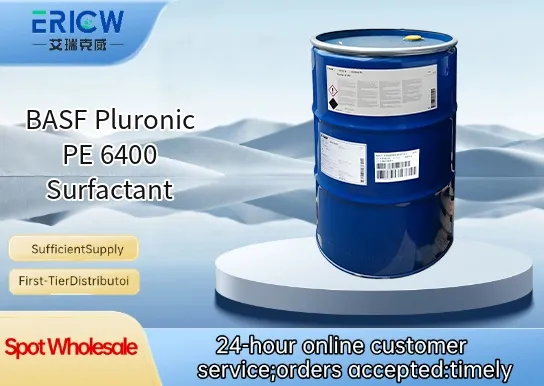
Non-ionic triblock copolymer based on poly(ethylene oxide)-poly(propylene oxide)-poly(ethylene oxide) (PEO-PPO-PEO) architecture.
Excellent solubilizing and stabilizing performance in aqueous systems across a broad temperature range.
Low foaming profile suitable for high-shear and low-foam industrial processes.
Highly effective as a dispersant and wetting agent for hydrophobic particles and surfaces.
Biocompatible and widely accepted in pharmaceutical and personal care formulations under current regulatory guidelines.
Stabilizer in aqueous polymer dispersions and latex formulations.
Processing aid in agrochemical suspension concentrates (SC) and emulsifiable concentrates (EC).
Excipient in oral and topical pharmaceutical formulations for solubilization of poorly water-soluble actives.
Emulsion stabilizer in cosmetic emulsions and cleansing systems.
Wetting and dispersing additive in pigment inkjet inks and functional coatings.
| Chemical Type | Non-ionic PEO-PPO-PEO triblock copolymer |
| Product Form | White to off-white flake or granular solid |
| Appearance | Free-flowing, hygroscopic solid at room temperature |
| Cloud Point (1% aqueous solution) | ~58–62 °C |
| pH (1% aqueous solution, 25 °C) | 5.0–7.0 |
| Average Molecular Weight | ~6,400 g/mol |
| Solubility | Freely soluble in water, ethanol, and ethylene glycol; insoluble in hydrocarbons |
| Key Features | Thermo-responsive behavior, low CMC, high HLB (~20.5) |
Q1: What is the primary chemical structure and classification of Pluronic PE 6400?
A: Pluronic PE 6400 is a nonionic triblock copolymer composed of a central hydrophobic polypropylene oxide (PPO) segment flanked by two hydrophilic polyethylene oxide (PEO) blocks. It belongs to the Pluronic® family of poloxamers and exhibits temperature-dependent solubility behavior typical of PEO-PPO-PEO surfactants.
Q2: In which types of industrial formulations is Pluronic PE 6400 most commonly used?
A: It is widely employed as a stabilizer, solubilizer, and emulsifier in aqueous systems such as agrochemical concentrates, pharmaceutical suspensions, personal care emulsions, and cleaning formulations—particularly where low-foaming, high-solubilization capacity and compatibility with electrolytes are required.
Q3: How does temperature affect the performance of Pluronic PE 6400 in solution?
A: Like many poloxamers, PE 6400 displays thermo-responsive behavior: it remains fully soluble at lower temperatures but may undergo micellization or phase separation upon heating, depending on concentration and formulation matrix. This property is leveraged in controlled-release and temperature-triggered applications.
Q4: Is Pluronic PE 6400 compatible with common preservatives and active ingredients in water-based products?
A: Yes—it demonstrates broad compatibility with a wide range of actives, including biocides, pesticides, APIs, and cosmetic actives, due to its nonionic nature and low irritation potential. Compatibility should always be verified experimentally in the final formulation, especially under varying pH or ionic strength conditions.
Q5: What is the typical dosage range for effective performance in industrial applications?
A: Dosage depends on formulation requirements and desired functionality, but it is typically used at low concentrations—generally ranging from 0.1% to 2% by weight—to achieve stabilization, solubilization, or viscosity modification without compromising system clarity or stability.
Contact With Us:
E-mail: wangxingqiang@ericwchem.com
Have a Questions? Call Us:
Add:
Building A1, Jiete Industrial Park, Huangpu District, Guangzhou City, Guangdong Province, China