English
 Español
 tiếng việt
 русский
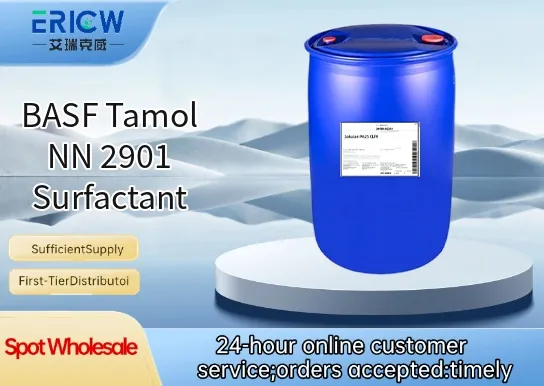
High-performance anionic dispersant based on sodium naphthalene formaldehyde condensate (NFC).
Excellent colloidal stabilization for inorganic pigments and fillers in aqueous systems.
Low foaming profile suitable for high-shear industrial processing conditions.
Good compatibility with a broad range of water-based resins, including acrylics, vinyl acetate copolymers, and styrene-butadiene lattices.
Enables improved grind stability and long-term storage viscosity control in pigment concentrates.
Waterborne architectural coatings (flat and low-sheen interior/exterior paints).
Pigment dispersions and colorants for industrial coatings and inkjet inks.
Ceramic tile adhesives and cementitious grouts requiring rheology control and particle dispersion.
Agrochemical suspension concentrates (SC formulations) for enhanced active ingredient suspension.
Construction additives for self-leveling underlayments and polymer-modified mortars.
| Chemical Type | Sodium naphthalene formaldehyde condensate (anionic) |
| Product Form | Aqueous solution (~40% active content) |
| Appearance | Brownish viscous liquid |
| pH (1% aqueous solution) | 7.5 – 9.0 |
| Density (20 °C) | 1.18 – 1.22 g/cm³ |
| Solubility | Completely miscible with water |
| Primary Applications | Dispersant for inorganic pigments, fillers, and functional solids in water-based systems |
| Key Features | High dispersing efficiency, low foam, shear-stable performance |
Q1: What is the primary function of Tamol NN 2901 in industrial formulations?
A: Tamol NN 2901 is a sodium naphthalene formaldehyde condensate surfactant designed primarily as a dispersing agent and rheology modifier. It helps stabilize pigment and filler suspensions in aqueous systems by providing electrostatic repulsion and steric hindrance, improving grind efficiency, storage stability, and viscosity control.
Q2: In which types of industrial applications is Tamol NN 2901 most commonly used?
A: It is widely employed in water-based industrial coatings, architectural paints, construction mortars, ceramic tile adhesives, and pigment concentrates. Its performance is especially valued in high-solids, low-VOC formulations where effective dispersion and controlled flow behavior are critical.
Q3: How does Tamol NN 2901 compare to other naphthalene-based dispersants in terms of compatibility and stability?
A: Tamol NN 2901 offers balanced compatibility with a broad range of binders—including acrylics, styrene-acrylics, vinyl acetate copolymers, and cementitious matrices—while maintaining good tolerance to electrolytes and pH variations typically encountered in industrial processes. Its molecular weight distribution is optimized to support both adsorption strength and colloidal stability without excessive foaming or sensitivity to hard water.
Q4: What are typical dosage guidelines for Tamol NN 2901 in pigment dispersion?
A: Dosage depends on pigment type, loading level, and desired rheological profile, but it is generally used at low concentrations—typically ranging from 0.1% to 2% by weight relative to pigment solids. Optimization through lab-scale trials is recommended to achieve target dispersion quality and viscosity response.
Contact With Us:
E-mail: wangxingqiang@ericwchem.com
Have a Questions? Call Us:
Add:
Building A1, Jiete Industrial Park, Huangpu District, Guangzhou City, Guangdong Province, China