English
 Español
 tiếng việt
 русский
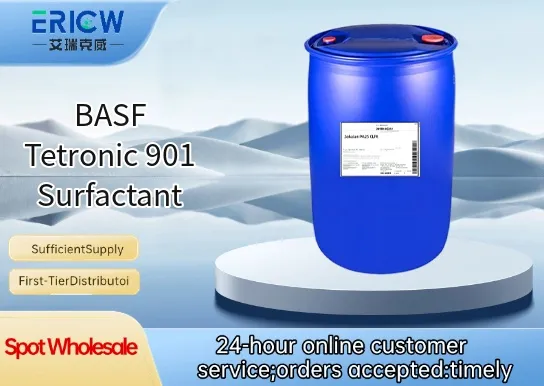
Nonionic, amphiphilic block copolymer based on polyethylene oxide (PEO) and polypropylene oxide (PPO) segments.
Excellent solubilizing and stabilizing capability for hydrophobic actives in aqueous systems.
Low foaming profile suitable for high-shear and industrial cleaning formulations.
Good compatibility with electrolytes and a broad pH range (pH 3–12).
Biodegradable backbone with low aquatic toxicity, supporting sustainable formulation design.
Agrochemical formulations — enhancing solubilization and foliar adhesion of active ingredients.
Industrial and institutional (I&I) cleaners — providing grease removal and soil suspension without excessive foam.
Pharmaceutical suspensions and microemulsions — acting as a stabilizer and wetting agent for poorly water-soluble drugs.
Personal care emulsions — enabling stable oil-in-water systems with mild sensory properties.
Coatings and inks — improving pigment dispersion and substrate wetting in water-based systems.
| Chemical Type | Tri-block copolymer (PEO-PPO-PEO) |
| Product Form | Pale yellow to amber viscous liquid |
| Appearance | Clear to slightly hazy, homogeneous liquid at 25°C |
| Primary Applications | Solubilizer, stabilizer, emulsifier, wetting agent |
| Key Features | Low foaming, high solubilization capacity, electrolyte-tolerant |
| Benefits | Improved formulation stability, reduced rinse requirements, enhanced active delivery |
| pH (1% aqueous solution) | 6.0 – 7.5 |
| Solubility | Freely soluble in water and common polar organic solvents |
Q1: What is the primary chemical nature of Tetronic 901?
A: Tetronic 901 is a polyether-based triblock copolymer surfactant, composed of a central hydrophobic polypropylene oxide (PPO) segment flanked by two hydrophilic polyethylene oxide (PEO) blocks. Its structure provides amphiphilic character and temperature-dependent solubility behavior.
Q2: In which types of formulations is Tetronic 901 most commonly used?
A: It is widely employed in aqueous agrochemical formulations (e.g., SC, SE, and EW), personal care emulsions, pharmaceutical dispersion systems, and industrial cleaning concentrates—particularly where stabilization of oil-in-water dispersions or solubilization of active ingredients is required.
Q3: How does Tetronic 901 perform under varying pH and ionic strength conditions?
A: As a nonionic surfactant, Tetronic 901 maintains good stability across a broad pH range (approximately pH 3–11) and exhibits moderate tolerance to electrolytes—though high salt concentrations may reduce its cloud point and affect micellization efficiency.
Q4: Is Tetronic 901 suitable for use in cold-process formulations?
A: Yes, its low viscosity and excellent water solubility at ambient temperatures enable straightforward incorporation into cold-process systems without heating or pre-dissolution steps—supporting energy-efficient manufacturing.
Q5: What are typical dosage guidelines for Tetronic 901 in end-use applications?
A: Dosage depends on formulation requirements, but it is typically used at low concentrations—generally ranging from 0.1% to 2% by weight—to achieve effective stabilization, wetting, or solubilization without compromising system rheology or clarity.
Contact With Us:
E-mail: wangxingqiang@ericwchem.com
Have a Questions? Call Us:
Add:
Building A1, Jiete Industrial Park, Huangpu District, Guangzhou City, Guangdong Province, China