English
 Español
 tiếng việt
 русский
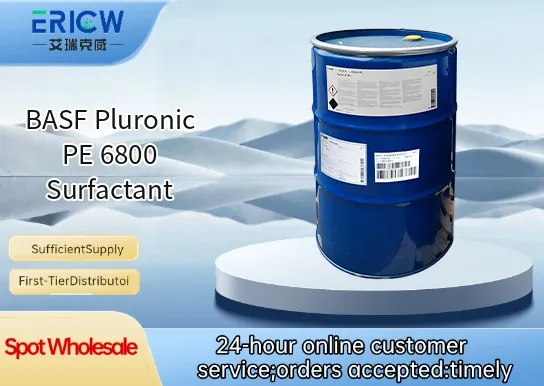
Non-ionic triblock copolymer based on poly(ethylene oxide)-poly(propylene oxide)-poly(ethylene oxide) (PEO-PPO-PEO) architecture.
Excellent solubilizing and stabilizing performance in aqueous systems across a broad pH range.
Low foaming profile, making it suitable for high-shear and low-foam industrial processes.
Biocompatible and widely accepted in pharmaceutical and personal care formulations under current regulatory guidelines.
Thermoresponsive behavior with reversible micellization near physiological temperatures.
Stabilizer and solubilizer in parenteral drug delivery systems and nanomedicine formulations.
Emulsifier and viscosity modifier in dermatological and cosmetic emulsions.
Dispersing agent for inorganic nanoparticles in coatings and functional fluids.
Processing aid in bioprocessing for cell culture media supplementation and membrane protein solubilization.
Component in cold-water detergent systems for enhanced soil suspension and redeposition control.
| Chemical Type | Non-ionic PEO-PPO-PEO triblock copolymer |
| Product Form | White to off-white flake or granular solid |
| Appearance | Free-flowing, hygroscopic solid at room temperature |
| Average Molecular Weight | Approx. 6,800 g/mol |
| Cloud Point (1% aqueous solution) | ~58–62 °C |
| pH (1% aqueous solution, 25 °C) | 5.0–7.0 |
| Solubility | Freely soluble in water, ethanol, and propylene glycol; insoluble in hydrocarbons |
| Storage Conditions | Store in original container at 15–25 °C, protected from moisture |
Q1: What is the primary chemical structure and classification of Pluronic PE 6800?
A: Pluronic PE 6800 is a nonionic triblock copolymer composed of a central hydrophobic polypropylene oxide (PPO) segment flanked by two hydrophilic polyethylene oxide (PEO) chains. It belongs to the Pluronic® family of polyether surfactants and exhibits amphiphilic character, enabling micelle formation in aqueous systems above its critical micelle concentration.
Q2: In which types of formulations is Pluronic PE 6800 commonly used as a stabilizer or solubilizer?
A: It is frequently employed in pharmaceutical suspensions and emulsions, agrochemical concentrates, personal care cleansing systems, and industrial cleaning formulations—particularly where mildness, low foaming, and effective solubilization of moderately hydrophobic actives are required. Its thermal responsiveness also supports use in temperature-triggered release applications.
Q3: How does Pluronic PE 6800 behave in aqueous solution with respect to cloud point and temperature sensitivity?
A: As a thermosensitive surfactant, Pluronic PE 6800 exhibits a distinct cloud point—typically observed in the range of 60–75 °C depending on concentration and ionic strength. This reversible phase transition enables applications such as hot-process emulsification, temperature-controlled viscosity modulation, and stimuli-responsive delivery systems.
Q4: Is Pluronic PE 6800 compatible with common electrolytes and other surfactants in complex formulations?
A: Yes—it demonstrates good compatibility with many anionic, cationic, and nonionic surfactants, as well as moderate tolerance to common inorganic salts. However, high electrolyte concentrations may lower its cloud point and affect micellar stability, so formulation screening under intended use conditions is recommended.
Q5: What are key handling and storage considerations for Pluronic PE 6800?
A: Store in original sealed containers at ambient temperatures (15–25 °C), protected from moisture and direct sunlight. The material is supplied as a free-flowing solid or paste, depending on grade and batch; gentle warming may be required for handling if crystallized. Avoid prolonged exposure to elevated temperatures prior to use to preserve performance consistency.
Contact With Us:
E-mail: wangxingqiang@ericwchem.com
Have a Questions? Call Us:
Add:
Building A1, Jiete Industrial Park, Huangpu District, Guangzhou City, Guangdong Province, China