English
 Español
 tiếng việt
 русский
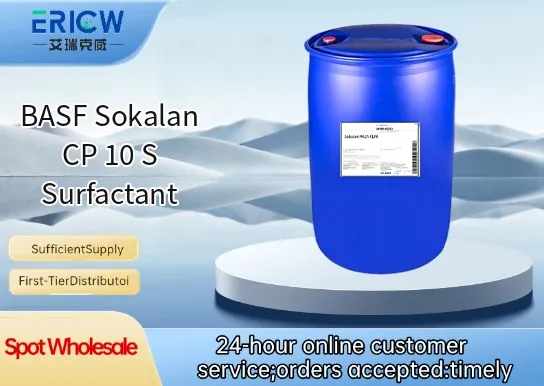
High-performance anionic polyelectrolyte based on polyacrylic acid with controlled molecular weight distribution.
Excellent dispersing and rheology-modifying functionality in aqueous systems, especially under high-salt conditions.
Enhances colloidal stability of pigments and fillers without compromising compatibility with common co-formulants.
pH-responsive viscosity behavior—provides shear-thinning flow properties ideal for spray- and brush-application formulations.
Low-foaming profile suitable for industrial cleaning, coating, and construction applications requiring minimal foam interference.
Waterborne architectural coatings (e.g., interior/exterior paints and primers).
Cementitious tile adhesives and self-leveling underlayments.
Industrial and institutional cleaning formulations (hard-surface cleaners, floor strippers).
Pigment dispersion concentrates for inkjet and decorative coatings.
Mineral-based grouts and waterproofing slurries.
| Chemical Type | Anionic polyacrylic acid copolymer |
| Product Form | Aqueous solution (~35% active content) |
| Appearance | Clear to slightly opalescent, low-viscosity liquid |
| pH (1% aqueous solution) | 2.8 – 3.5 |
| Density (20 °C) | ~1.08 – 1.12 g/cm³ |
| Solubility | Completely miscible with water; limited solubility in organic solvents |
| Primary Applications | Dispersant, rheology modifier, stabilizer in aqueous construction & coating systems |
| Key Features | High electrolyte tolerance, low foaming, pH-sensitive thickening |
Q1: What is the primary function of Sokalan CP 10 S in formulations?
A: Sokalan CP 10 S is a polymeric surfactant designed to provide effective dispersion stabilization and rheology modification, particularly in aqueous systems containing pigments, fillers, or inorganic particles. It functions through steric stabilization rather than ionic charge, offering robust performance across varying pH and ionic strength conditions.
Q2: Is Sokalan CP 10 S compatible with other common surfactants or additives?
A: Yes, Sokalan CP 10 S generally shows good compatibility with non-ionic surfactants and many anionic dispersants. However, interactions with strongly cationic species should be evaluated case-by-case, as potential complexation or reduced efficiency may occur depending on formulation composition and concentration.
Q3: How does Sokalan CP 10 S perform under high-shear or elevated-temperature processing conditions?
A: As a polyacrylate-based polymer, Sokalan CP 10 S demonstrates good thermal and mechanical stability during typical industrial processing, including high-shear mixing and moderate heating. Its polymeric structure helps maintain dispersion integrity where low-MW surfactants might degrade or desorb.
Q4: What types of industrial applications is Sokalan CP 10 S most commonly used in?
A: It is widely applied in water-based pigment dispersions for architectural coatings, industrial finishes, and construction chemicals—especially where long-term storage stability, freeze-thaw resistance, and low foaming are required. It is also used in specialty agrochemical suspensions and ceramic slip formulations.
Q5: How should Sokalan CP 10 S be incorporated into a formulation for optimal performance?
A: For best results, it is typically added during the milling or dispersion stage, either pre-diluted in water or directly to the aqueous phase. Dosage depends on formulation requirements but generally ranges from 0.1% to 2% by weight relative to the solid content, with optimization recommended via small-scale trials.
Contact With Us:
E-mail: wangxingqiang@ericwchem.com
Have a Questions? Call Us:
Add:
Building A1, Jiete Industrial Park, Huangpu District, Guangzhou City, Guangdong Province, China