English
 Español
 tiếng việt
 русский
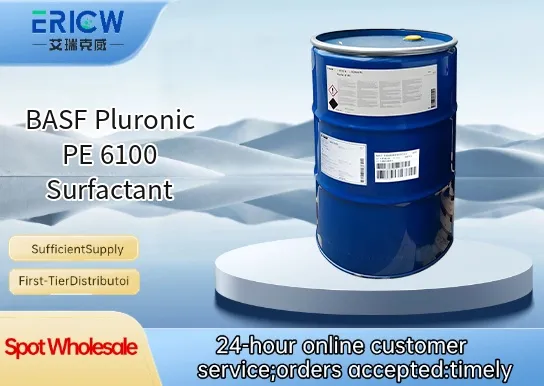
Nonionic triblock copolymer based on poly(ethylene oxide)-poly(propylene oxide)-poly(ethylene oxide) (PEO-PPO-PEO) architecture.
Excellent solubilizing and emulsifying capacity in aqueous and semi-aqueous systems.
Low foaming profile suitable for high-shear and industrial cleaning applications.
Good thermal stability and compatibility with electrolytes, acids, and bases within typical formulation pH ranges.
EcoVadis-recognized sustainable surfactant with readily biodegradable PEO segments and low aquatic toxicity profile.
Industrial and institutional (I&I) hard-surface cleaners, including alkaline degreasers.
Agrochemical formulations requiring stable oil-in-water emulsions (e.g., EC, SE).
Personal care cleansing systems where mildness and low irritation are critical (e.g., facial cleansers, body washes).
Pharmaceutical solubilization aids for poorly water-soluble active pharmaceutical ingredients (APIs).
Specialty coatings and ink dispersants for improved pigment wetting and colloidal stability.
| Chemical Type | Nonionic PEO-PPO-PEO triblock copolymer |
| Product Form | Pale yellow to amber viscous liquid |
| Appearance | Clear to slightly hazy, homogeneous liquid at 25°C |
| pH (1% aqueous solution, 25°C) | 5.0 – 7.0 |
| Solubility in Water | Freely soluble at room temperature; forms clear solutions up to ≥30% w/w |
| Cloud Point (1% aqueous solution) | ~68–72°C |
| Hydrophilic-Lipophilic Balance (HLB) | ~16.0 |
| Primary Applications | Emulsification, solubilization, dispersion, wetting |
Q1: What is the primary chemical nature and structural class of Pluronic PE 6100?
A: Pluronic PE 6100 is a nonionic triblock copolymer composed of poly(propylene oxide) (PPO) flanked by poly(ethylene oxide) (PEO) end blocks. It belongs to the Pluronic® PE series, specifically designed for enhanced thermal stability and low-foaming performance in demanding industrial formulations.
Q2: In which types of industrial cleaning or formulation systems is Pluronic PE 6100 most commonly applied?
A: It is widely used in high-temperature industrial cleaners, metalworking fluids, and alkaline detergent concentrates where low foam generation, excellent emulsification of oils and greases, and stability under elevated pH and temperature are required.
Q3: How does Pluronic PE 6100 compare to standard Pluronic F or L grades in terms of foaming behavior and thermal response?
A: Compared to conventional Pluronic F grades, PE 6100 exhibits significantly reduced foaming across a broad temperature range and maintains surfactant functionality at higher temperatures due to its tailored PPO/PEO balance and higher molecular weight architecture.
Q4: Is Pluronic PE 6100 compatible with common anionic and nonionic surfactants in multi-component systems?
A: Yes, it demonstrates good compatibility with typical anionic surfactants (e.g., alkylbenzene sulfonates, alcohol ethoxysulfates) and other nonionic surfactants, enabling synergistic performance in complex detergent and process aid formulations without phase separation under standard use conditions.
Q5: What guidance can be provided on typical dosage levels for Pluronic PE 6100 in industrial cleaner concentrates?
A: Dosage depends on formulation requirements and performance targets, but it is typically used at low concentrations—generally ranging from 0.1% to 2% by weight—in final concentrate blends, with optimization recommended based on specific soil type, water hardness, and processing conditions.
Contact With Us:
E-mail: wangxingqiang@ericwchem.com
Have a Questions? Call Us:
Add:
Building A1, Jiete Industrial Park, Huangpu District, Guangzhou City, Guangdong Province, China