English
 Español
 tiếng việt
 русский
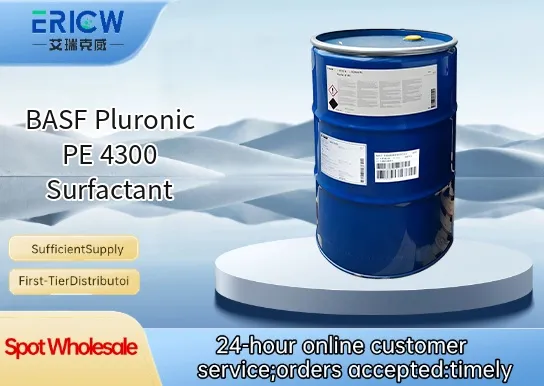
Non-ionic triblock copolymer based on poly(ethylene oxide)-poly(propylene oxide)-poly(ethylene oxide) (PEO-PPO-PEO) architecture.
Excellent water solubility and low foaming profile across broad pH and temperature ranges.
Effective wetting, dispersing, and emulsifying agent with low critical micelle concentration (CMC).
Thermoresponsive behavior—exhibits reversible sol-gel transition upon heating, supporting controlled-release formulations.
Highly compatible with electrolytes, surfactants, and active ingredients in complex industrial formulations.
Stabilizer and solubilizer in agrochemical formulations (e.g., SC, SE, and OD concentrates).
Viscosity modifier and emulsion stabilizer in personal care products such as creams and gels.
Dispersant for pigments and inorganic fillers in waterborne coatings and inks.
Excipient in pharmaceutical oral and topical delivery systems for enhanced drug solubilization.
Processing aid in polymer latex synthesis and nanoparticle dispersion.
| Chemical Type | Non-ionic PEO-PPO-PEO triblock copolymer |
| Product Form | Pale yellow to colorless viscous liquid or flake (solid at room temperature) |
| Appearance | Clear to slightly hazy, homogeneous |
| pH (1% aqueous solution) | 5.0–7.0 |
| Solubility | Freely soluble in water; miscible with many polar organic solvents |
| Cloud Point (1% aqueous solution) | Approx. 62–68 °C |
| Molecular Weight (approx.) | 4,300 g/mol |
| Primary Applications | Emulsification, solubilization, dispersion, stabilization, thermogelling |
Q1: What is the primary chemical nature of Pluronic PE 4300?
A: Pluronic PE 4300 is a nonionic triblock copolymer composed of a central hydrophobic polypropylene oxide (PPO) segment flanked by two hydrophilic polyethylene oxide (PEO) blocks. Its structure provides balanced amphiphilicity suitable for solubilization, stabilization, and emulsification in aqueous systems.
Q2: In which types of formulations is Pluronic PE 4300 commonly used?
A: It is frequently employed in pharmaceutical suspensions and injectables as a wetting agent and stabilizer, in agrochemical concentrates for improving active ingredient dispersion, and in industrial cleaning formulations to enhance soil removal and foam control—particularly where low-foaming, nonionic performance is required.
Q3: How does temperature affect the behavior of Pluronic PE 4300 in solution?
A: Like many PEO-PPO-PEO surfactants, Pluronic PE 4300 exhibits thermoresponsive properties—its solubility decreases with increasing temperature, potentially leading to cloud point behavior. This characteristic can be leveraged in applications such as temperature-triggered release or reversible micellization, though exact cloud point depends on concentration and electrolyte content.
Q4: Is Pluronic PE 4300 compatible with common preservatives and ionic excipients?
A: Yes, it generally shows good compatibility with widely used antimicrobial agents (e.g., parabens, benzyl alcohol) and typical ionic additives such as buffers and salts. However, high concentrations of multivalent ions may reduce its colloidal stability, so formulation-specific compatibility testing is recommended.
Contact With Us:
E-mail: wangxingqiang@ericwchem.com
Have a Questions? Call Us:
Add:
Building A1, Jiete Industrial Park, Huangpu District, Guangzhou City, Guangdong Province, China