English
 Español
 tiếng việt
 русский
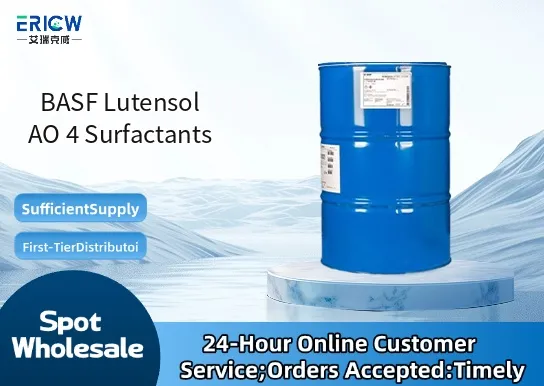
Nonionic surfactant based on linear alcohol ethoxylate with optimized hydrophilic-lipophilic balance (HLB ≈ 4.5) for effective wetting and emulsification.
Excellent low-temperature stability and solubility in polar organic solvents and water-miscible systems.
Low foaming profile suitable for high-shear industrial cleaning and metalworking applications.
Biodegradable under aerobic conditions, supporting sustainable formulation design in compliance with OECD 301 standards.
Compatible with anionic, cationic, and amphoteric surfactants, enabling broad formulation flexibility.
Industrial and institutional cleaners, especially hard-surface degreasers and pre-treatment baths.
Metalworking fluids, including soluble oils and semi-synthetic coolants for ferrous and non-ferrous machining.
Agrochemical adjuvants for improving active ingredient dispersion and foliar retention.
Paint and coating additives for pigment wetting and stabilization in solvent-borne systems.
Textile auxiliaries in scouring and desizing formulations for polyester-cotton blends.
| Chemical Type | Linear alcohol ethoxylate (C13–C15, avg. 4 EO units) |
| Product Form | Pale yellow to colorless viscous liquid |
| Appearance | Clear, homogeneous liquid at 20 °C |
| Active Content | ≥ 98.0 wt-% |
| Cloud Point (1% aqueous solution) | ≈ 25–30 °C |
| pH (1% aqueous solution, 20 °C) | 5.5–7.0 |
| Density (20 °C) | 0.98–1.02 g/cm³ |
| Viscosity (20 °C) | 200–400 mPa·s |
Q1: What is the primary function of Lutensol AO 4 in industrial formulations?
A: Lutensol AO 4 is a nonionic surfactant based on alkyl alcohol ethoxylate chemistry, primarily used for its excellent wetting, dispersing, and emulsifying properties in aqueous systems. It supports stable performance across a range of pH and electrolyte conditions, making it suitable for cleaning, agrochemical, and industrial maintenance applications.
Q2: Is Lutensol AO 4 compatible with anionic or cationic surfactants?
A: Lutensol AO 4 demonstrates good compatibility with many anionic surfactants—such as alkyl sulfates and alkylbenzene sulfonates—enabling synergistic formulation effects. Compatibility with cationic species should be evaluated case by case, as interactions may occur depending on concentration, pH, and system composition.
Q3: How does temperature affect the performance of Lutensol AO 4?
A: As a low-EO ethoxylate, Lutensol AO 4 exhibits relatively low cloud point behavior and maintains effective surface activity at ambient to moderately elevated temperatures. Its performance may decrease near or above its cloud point, so optimal use is typically within standard process temperature ranges encountered in cleaning or dispersion applications.
Q4: Can Lutensol AO 4 be used in environmentally sensitive formulations?
A: Yes—Lutensol AO 4 is readily biodegradable under standard aerobic conditions and aligns with BASF’s commitment to sustainable surfactant design. Its alkyl chain is derived from linear, natural-source alcohols, contributing to favorable environmental and toxicological profiles in end-use applications.
Contact With Us:
E-mail: wangxingqiang@ericwchem.com
Have a Questions? Call Us:
Add:
Building A1, Jiete Industrial Park, Huangpu District, Guangzhou City, Guangdong Province, China