English
 Español
 tiếng việt
 русский
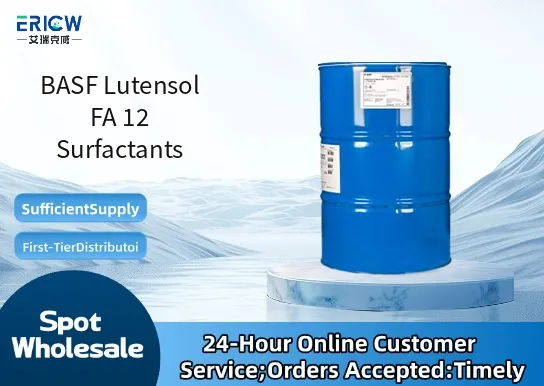
Nonionic surfactant based on fatty alcohol ethoxylate (C12) with optimized hydrophilic-lipophilic balance (HLB ≈ 12.5) for balanced emulsification and solubilization.
Excellent low-temperature stability and freeze-thaw resistance, enabling reliable performance in cold-climate formulations.
Low foaming profile suitable for high-shear industrial cleaning and metalworking applications where foam control is critical.
Good compatibility with anionic, cationic, and amphoteric surfactants, facilitating versatile formulation design.
Eco-preferred profile: readily biodegradable (OECD 301E compliant) and free of alkylphenol ethoxylates (APEO-free).
Industrial and institutional (I&I) hard-surface cleaners, including alkaline degreasers and sanitizing formulations.
Metalworking fluids—used as emulsifier and stabilizer in soluble oil and semi-synthetic coolants.
Agrochemical adjuvants for enhancing active ingredient dispersion and foliar retention in crop protection sprays.
Textile auxiliaries, particularly in scouring, dye leveling, and low-foam rinsing processes.
Paint and coating additives for pigment wetting, latex stabilization, and viscosity control in waterborne systems.
| Chemical Type | Fatty alcohol ethoxylate (C12, ~7–8 EO units) |
| Product Form | Pale yellow to colorless viscous liquid |
| Appearance (at 25°C) | Clear, homogeneous liquid |
| Active Content (wt %) | 99.0–100.0% |
| HLB Value | ≈12.5 |
| pH (1% aqueous solution, 20°C) | 5.5–7.0 |
| Density (20°C) | 0.99–1.02 g/cm³ |
| Cloud Point (1% aqueous solution) | 62–66°C |
Q1: What is the primary chemical nature of Lutensol® FA 12?
A: Lutensol® FA 12 is a nonionic surfactant based on a fatty alcohol (C12) ethoxylated with a defined average number of ethylene oxide units. It exhibits excellent water solubility, low foaming characteristics, and good compatibility with electrolytes and other surfactants.
Q2: In which types of industrial cleaning formulations is Lutensol® FA 12 most commonly used?
A: It is widely employed in low-foaming, high-efficiency aqueous cleaners for metalworking fluids, industrial degreasers, and CIP (clean-in-place) systems—particularly where stable performance under hard water or elevated temperatures is required.
Q3: How does Lutensol® FA 12 perform in formulations containing anionic surfactants or builders?
A: Lutensol® FA 12 demonstrates good compatibility with common anionic surfactants (e.g., LAS, AES) and alkaline builders (e.g., sodium carbonate, silicates), contributing to enhanced detergency without compromising formulation stability or phase behavior.
Q4: Is Lutensol® FA 12 suitable for use in low-temperature cleaning applications?
A: Yes, it maintains effective solubilization and soil removal performance at reduced temperatures (e.g., 20–40 °C), making it well-suited for energy-efficient cleaning processes without requiring thermal activation.
Q5: What are typical dosage guidelines for Lutensol® FA 12 in finished formulations?
A: Dosage depends on formulation requirements and application intensity, but it is typically used at low concentrations—generally ranging from 0.1% to 2% by weight—in industrial cleaning concentrates and ready-to-use solutions.
Contact With Us:
E-mail: wangxingqiang@ericwchem.com
Have a Questions? Call Us:
Add:
Building A1, Jiete Industrial Park, Huangpu District, Guangzhou City, Guangdong Province, China