English
 Español
 tiếng việt
 русский
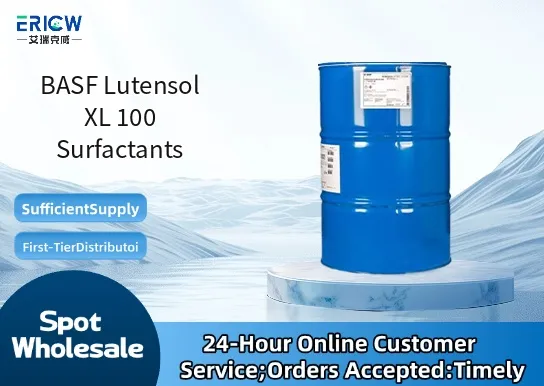
Nonionic surfactant based on ethoxylated linear alcohol with optimized hydrophile-lipophile balance (HLB) for robust emulsification.
Excellent low-temperature stability and freeze-thaw resistance in aqueous formulations.
Low foaming profile suitable for high-shear industrial cleaning and metalworking applications.
Good compatibility with anionic, cationic, and other nonionic surfactants in complex formulations.
Eco-preferred profile: readily biodegradable (OECD 301B compliant) and free of alkylphenol ethoxylates (APEO-free).
Industrial and institutional (I&I) hard-surface cleaners, especially alkaline degreasers.
Metalworking fluids, including soluble oils and semi-synthetic coolants.
Agrochemical adjuvants for enhanced active ingredient dispersion and foliar uptake.
Textile auxiliaries for scouring, dye leveling, and wetting of synthetic fibers.
Paint and coating additives for pigment dispersion stabilization and gloss enhancement.
| Chemical Type | Nonionic — Ethoxylated Linear Alcohol (C13–C15) |
| Product Form | Liquid |
| Appearance | Pale yellow to colorless, clear liquid |
| Active Content (wt. %) | ~100% |
| Cloud Point (1% aq. solution) | ~68–72 °C |
| pH (1% aqueous solution) | 5.5–7.0 |
| Viscosity (20 °C) | 200–400 mPa·s |
| Primary Applications | Emulsification, wetting, solubilization, dispersion |
Q1: What is the primary chemical nature of Lutensol XL 100?
A: Lutensol XL 100 is a nonionic surfactant based on a linear alcohol ethoxylate structure, featuring a balanced hydrophile-lipophile relationship that supports effective wetting, emulsification, and solubilization in aqueous systems.
Q2: In which types of industrial cleaning formulations is Lutensol XL 100 commonly applied?
A: It is frequently used in high-performance industrial and institutional cleaners—especially alkaline and low-foaming formulations—for metal cleaning, CIP (clean-in-place) solutions, and hard-surface degreasers where robust soil removal and compatibility with builders and chelants are required.
Q3: How does Lutensol XL 100 perform under elevated temperature and high-pH conditions?
A: It demonstrates good thermal stability and alkaline resistance, maintaining surfactant functionality in formulations with pH values up to approximately 12.5 and at temperatures commonly encountered in hot cleaning processes.
Q4: Is Lutensol XL 100 compatible with anionic surfactants and common detergent builders?
A: Yes—it exhibits broad compatibility with anionic surfactants (e.g., LAS, AES), phosphates, silicates, carbonates, and polycarboxylates, making it suitable for complex multi-component cleaning systems without significant phase separation or performance loss.
Q5: What is the typical dosage range for Lutensol XL 100 in formulated products?
A: Dosage depends on formulation requirements and application intensity, but it is typically used at low concentrations—generally ranging from 0.1% to 2% by weight—in final ready-to-use or concentrate systems.
Contact With Us:
E-mail: wangxingqiang@ericwchem.com
Have a Questions? Call Us:
Add:
Building A1, Jiete Industrial Park, Huangpu District, Guangzhou City, Guangdong Province, China