English
 Español
 tiếng việt
 русский
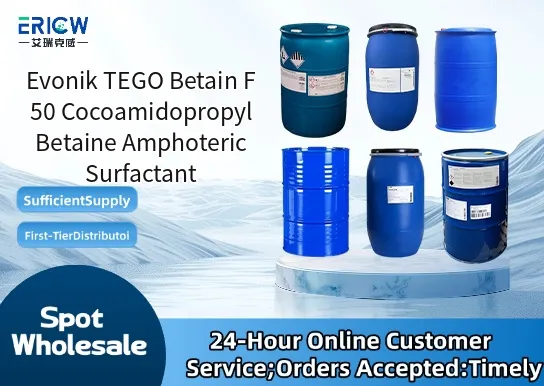
High foaming and foam-stabilizing performance, especially in combination with anionic surfactants.
Mildness to skin and eyes, making it ideal for sensitive personal care formulations.
pH-dependent amphoteric behavior—cationic at low pH, zwitterionic near neutral pH, and anionic at higher pH.
Excellent compatibility with a broad range of surfactants, polymers, and electrolytes.
Biodegradable and derived from renewable coconut-based raw materials.
Shampoos and conditioning shampoos for enhanced mildness and viscosity control.
Body washes and liquid soaps for rich lather and skin feel improvement.
Facial cleansers and baby care products requiring high dermatological compatibility.
Oral care formulations such as toothpastes and mouthwashes for gentle cleansing and foam modulation.
Industrial cleaning agents where low irritation and high rinseability are critical.
| Chemical Type | Cocoamidopropyl betaine (CAPB), amphoteric surfactant |
| Product Form | Aqueous solution (~50% active content) |
| Appearance | Clear, light yellow to amber viscous liquid |
| pH (10% aqueous solution) | 5.0–7.0 |
| Solubility | Freely soluble in water; miscible with most polar organic solvents |
| Primary Applications | Personal care cleansing and foaming systems |
| Key Features | Mildness, foam boosting/stabilization, viscosity enhancement, electrolyte tolerance |
| Storage Conditions | Store in cool, dry place; protect from freezing and direct sunlight |
Q1: What is the primary functional role of TEGO Betain F 50 in personal care formulations?
A: TEGO Betain F 50 functions primarily as a mild, foaming and viscosity-enhancing amphoteric surfactant. It is widely used to boost foam volume and stability, improve mildness in cleansing systems (especially when combined with anionic surfactants like SLES), and provide conditioning benefits without irritation.
Q2: Is TEGO Betain F 50 compatible with common anionic, cationic, and nonionic surfactants?
A: Yes — as an amphoteric surfactant, TEGO Betain F 50 exhibits broad compatibility across surfactant classes. It synergizes well with anionics (e.g., sulfates, sulfonates), remains stable in the presence of nonionics (e.g., alkyl ethoxylates), and can be formulated alongside certain cationics under controlled pH conditions, though compatibility testing is recommended for specific combinations.
Q3: How does pH affect the performance and stability of TEGO Betain F 50?
A: TEGO Betain F 50 displays pH-dependent charge behavior: it acts as a zwitterion near neutral pH, carries a net positive charge under acidic conditions, and a net negative charge under alkaline conditions. Optimal foaming and compatibility are typically observed between pH 5.0 and 7.5; prolonged exposure to highly acidic or strongly alkaline media may impact long-term stability.
Q4: What are typical usage levels of TEGO Betain F 50 in liquid shampoo or body wash formulations?
A: Dosage depends on formulation goals, but TEGO Betain F 50 is typically used at low concentrations — generally ranging from 0.1% to 2% by weight — to enhance foam, improve mildness, and stabilize viscosity. Higher levels may be applied where extra conditioning or thickening is desired, subject to compatibility and regulatory considerations.
Contact With Us:
E-mail: wangxingqiang@ericwchem.com
Have a Questions? Call Us:
Add:
Building A1, Jiete Industrial Park, Huangpu District, Guangzhou City, Guangdong Province, China