English
 Español
 tiếng việt
 русский
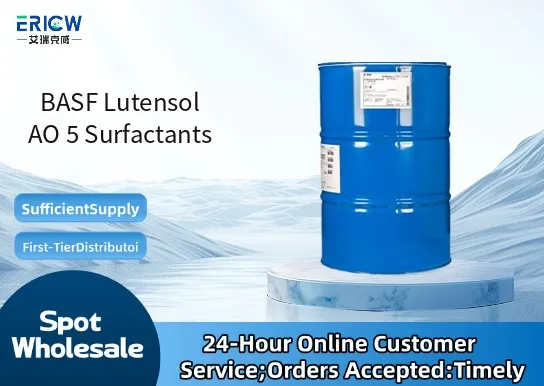
Nonionic alcohol ethoxylate with balanced hydrophilic-lipophilic character for versatile formulation performance.
Excellent wetting and emulsifying properties in aqueous systems across a broad pH range.
Low foaming profile suitable for high-shear and industrial cleaning applications.
Good biodegradability and favorable environmental profile based on OECD 301 test guidelines.
Stable in hard water and compatible with common anionic, cationic, and amphoteric surfactants.
Industrial and institutional (I&I) cleaners, including floor cleaners and degreasers.
Agrochemical formulations such as emulsifiable concentrates (EC) and suspension concentrates (SC).
Textile processing auxiliaries, especially for scouring and dye leveling agents.
Paints and coatings as a co-emulsifier and stabilizer in acrylic and styrene-butadiene dispersions.
Home care products including dishwashing liquids and all-purpose cleaners requiring low-foam performance.
| Chemical Type | Alcohol ethoxylate (C13–C15 linear alcohols, avg. 5 EO units) |
| Product Form | Liquid |
| Appearance | Pale yellow to colorless, clear liquid |
| pH (1% aqueous solution, 20 °C) | 5.5 – 7.0 |
| Active Content (wt. %) | 99.0 – 100.0 |
| Density (20 °C, g/cm³) | 0.98 – 1.02 |
| Cloud Point (1% aqueous solution, °C) | 42 – 48 |
| Primary Applications | Wetting agent, emulsifier, solubilizer, dispersant |
Q1: What is the primary chemical nature of Lutensol AO 5?
A: Lutensol AO 5 is a nonionic surfactant based on alcohol ethoxylate chemistry, specifically derived from linear C12–C15 alcohols reacted with approximately 5 moles of ethylene oxide per mole of alcohol. It exhibits good water solubility, low foaming characteristics, and balanced hydrophilic-lipophilic properties suited for emulsification and wetting applications.
Q2: In which types of industrial formulations is Lutensol AO 5 commonly used?
A: It is widely employed in industrial and institutional cleaning products, metalworking fluids, agrochemical emulsifiable concentrates, and textile processing auxiliaries. Its stability in hard water and compatibility with electrolytes make it especially suitable for demanding aqueous systems where robust performance under variable pH or ionic strength is required.
Q3: How does Lutensol AO 5 compare to higher-EO analogues like Lutensol AO 7 or AO 9 in terms of performance?
A: With a lower average EO number, Lutensol AO 5 offers greater oil solubility and enhanced affinity for nonpolar phases compared to higher-EO variants. This makes it particularly effective as a co-emulsifier or solubilizer in oil-in-water systems requiring moderate HLB (~9–10), while retaining sufficient water dispersibility for stable dilution.
Q4: Is Lutensol AO 5 compatible with anionic and cationic surfactants?
A: It demonstrates broad compatibility with most anionic surfactants—such as alkylbenzene sulfonates and alcohol sulfates—enabling synergistic performance in blended systems. Compatibility with cationic species should be evaluated case by case, as interactions may occur depending on concentration, pH, and specific counterion; formulation testing is recommended for cationic-containing applications.
Q5: What are key handling and storage recommendations for Lutensol AO 5?
A: Store in original sealed containers at temperatures between 5 °C and 30 °C, protected from freezing and prolonged exposure to elevated heat or direct sunlight. The product is supplied as a clear, viscous liquid; slight cloudiness at low temperatures is reversible upon gentle warming and does not affect performance. Always follow standard industrial hygiene practices during handling.
Contact With Us:
E-mail: wangxingqiang@ericwchem.com
Have a Questions? Call Us:
Add:
Building A1, Jiete Industrial Park, Huangpu District, Guangzhou City, Guangdong Province, China