English
 Español
 tiếng việt
 русский
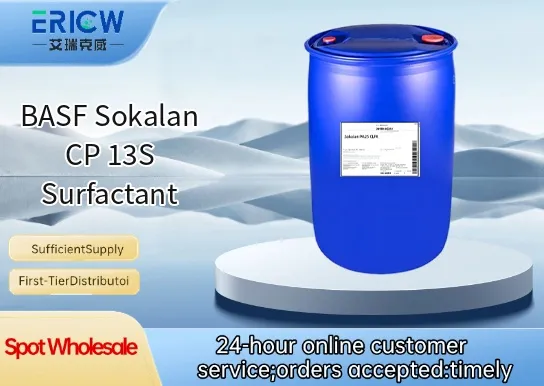
Highly effective anionic polyelectrolyte based on polyacrylic acid, optimized for colloidal stabilization.
Excellent dispersion performance in high-ionic-strength environments and across broad pH ranges (pH 4–10).
Low foaming profile, supporting efficient processing in industrial cleaning and formulation systems.
Enhanced compatibility with nonionic surfactants and common builders in aqueous formulations.
Biodegradable backbone structure aligned with evolving regulatory and sustainability requirements.
Industrial and institutional (I&I) hard-surface cleaners.
Automatic dishwashing (ADW) detergent formulations.
Laundry detergent boosters for anti-redeposition and soil suspension.
Water-based pigment dispersions in coatings and inks.
Scale and corrosion inhibition additives in cooling water treatment systems.
| Chemical Type | Polycarboxylate-based anionic polyelectrolyte |
| Product Form | Aqueous solution (~30% active content) |
| Appearance | Clear to slightly opalescent, low-viscosity liquid |
| pH (1% aqueous solution) | 3.5 – 4.5 |
| Density (20 °C) | ~1.05 – 1.08 g/cm³ |
| Solubility | Completely miscible with water; insoluble in organic solvents |
| Storage Stability | Stable for ≥12 months at 5–30 °C in sealed container |
| Primary Applications | Dispersion stabilizer, anti-redeposition agent, chelate enhancer |
Q1: What is the primary function of Sokalan CP 13S in industrial formulations?
A: Sokalan CP 13S is a polyacrylate-based polyelectrolyte surfactant primarily used for dispersion stabilization, rheology modification, and colloidal stabilization in aqueous systems. It helps prevent particle agglomeration and maintains uniform suspension of pigments, fillers, or other insoluble components.
Q2: Is Sokalan CP 13S suitable for use in low-foaming applications?
A: Yes — as a non-ionic, high-molecular-weight polyelectrolyte, Sokalan CP 13S exhibits inherently low foaming characteristics, making it well-suited for applications where foam control is critical, such as cleaning concentrates, industrial detergents, and certain coating processes.
Q3: How does Sokalan CP 13S perform under varying pH conditions?
A: Sokalan CP 13S demonstrates good stability across a broad pH range (approximately pH 4–12), maintaining effective dispersion performance in both mildly acidic and alkaline environments. Its anionic character intensifies at higher pH, enhancing electrostatic repulsion between particles.
Q4: Can Sokalan CP 13S be used in combination with other surfactants or additives?
A: Yes — Sokalan CP 13S is generally compatible with many non-ionic and anionic surfactants, as well as common co-binders and thickeners. However, compatibility should be verified experimentally in the final formulation due to potential interactions with multivalent cations or highly cationic species.
Q5: What is the typical dosage range for Sokalan CP 13S in commercial formulations?
A: Dosage depends on formulation requirements and desired performance, but Sokalan CP 13S is typically used at low concentrations — generally ranging from 0.1% to 2% by weight relative to the total formulation — with optimization recommended through lab-scale trials.
Contact With Us:
E-mail: wangxingqiang@ericwchem.com
Have a Questions? Call Us:
Add:
Building A1, Jiete Industrial Park, Huangpu District, Guangzhou City, Guangdong Province, China