English
 Español
 tiếng việt
 русский
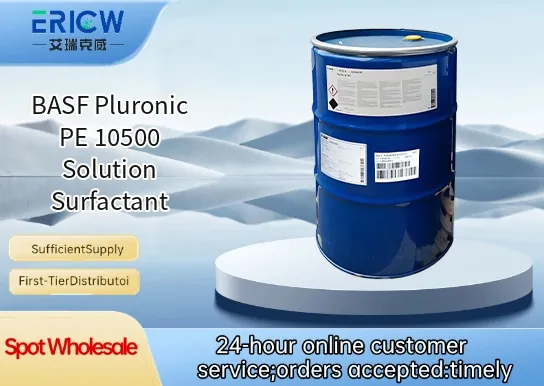
Non-ionic triblock copolymer surfactant based on poly(ethylene oxide)-poly(propylene oxide)-poly(ethylene oxide) (PEO-PPO-PEO) architecture.
High molecular weight (approx. 10,500 g/mol) offering enhanced steric stabilization and viscosity-modifying capability in aqueous systems.
Excellent solubilizing and emulsifying performance across a broad pH and temperature range.
Low foaming profile suitable for high-shear and industrial cleaning applications.
Biodegradable under OECD 301 standard conditions and compliant with EU Ecolabel criteria for surfactants.
Stabilizer and rheology modifier in water-based industrial coatings and architectural paints.
Emulsifier and co-surfactant in high-performance metalworking fluids and cutting oils.
Solubilizer for hydrophobic actives in agrochemical formulations (e.g., SC, SE, and OD concentrates).
Dispersing aid in pigment grinding and nanomaterial suspension for battery electrode slurries.
Functional additive in pharmaceutical suspensions and topical delivery systems requiring non-ionic, low-irritancy surfactants.
| Chemical Type | Non-ionic PEO-PPO-PEO triblock copolymer |
| Product Form | Aqueous solution (~30–35% active content) |
| Appearance | Clear, colorless to pale yellow liquid |
| pH (1% aqueous solution, 25°C) | 6.0–7.5 |
| Cloud Point (1% aqueous solution) | ~75–80°C |
| Viscosity (25°C, Brookfield RV, spindle #3, 20 rpm) | 1,500–3,000 mPa·s |
| Solubility | Freely soluble in water; miscible with common polar organic solvents (e.g., ethanol, propylene glycol) |
| Storage Stability | Stable for ≥24 months at 5–30°C in sealed original container |
Q1: What is the primary function of Pluronic PE 10500 Solution in formulations?
A: Pluronic PE 10500 Solution functions primarily as a nonionic surfactant and solubilizer, offering effective micelle formation, emulsification, and stabilization of hydrophobic actives in aqueous systems. Its PEO-PPO-PEO triblock structure provides balanced hydrophilic-lipophilic character suitable for demanding applications such as pharmaceutical solubilization and industrial cleaning.
Q2: Is Pluronic PE 10500 Solution compatible with common preservatives and active ingredients in personal care or pharmaceutical products?
A: Yes, it demonstrates broad compatibility with typical preservatives (e.g., parabens, phenoxyethanol), acids, bases, and many APIs and cosmetic actives. However, compatibility should always be confirmed experimentally under intended formulation conditions, especially in presence of high electrolyte concentrations or extreme pH.
Q3: How does temperature affect the performance of Pluronic PE 10500 Solution?
A: As a thermosensitive polymer, its micellization behavior and cloud point are temperature-dependent. It typically exhibits reversible micelle formation upon heating, enhancing solubilization capacity above its critical micelle temperature (CMT). Performance may vary across thermal cycles, so stability testing under process and storage conditions is recommended.
Q4: What is the typical dosage range for Pluronic PE 10500 Solution in aqueous formulations?
A: Dosage depends on formulation requirements and target functionality, but it is typically used at low concentrations—generally ranging from 0.1% to 2% by weight—to achieve effective solubilization or stabilization without compromising viscosity or sensory properties.
Contact With Us:
E-mail: wangxingqiang@ericwchem.com
Have a Questions? Call Us:
Add:
Building A1, Jiete Industrial Park, Huangpu District, Guangzhou City, Guangdong Province, China