English
 Español
 tiếng việt
 русский
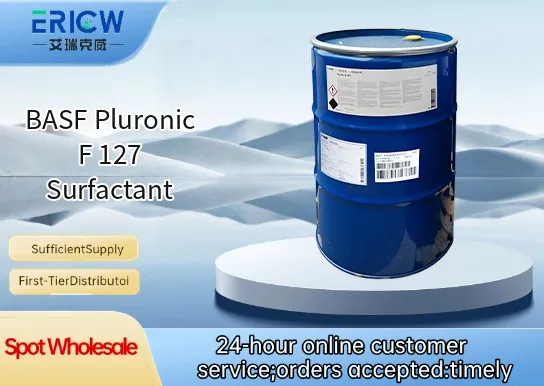
Thermoreversible gelling behavior: forms stable, transparent hydrogels above critical micelle temperature (CMT), enabling injectable and in situ gel-forming formulations.
Highly biocompatible and non-ionic, with low cytotoxicity — widely accepted for pharmaceutical and biomedical applications.
Excellent solubilizing capacity for hydrophobic actives, including APIs, vitamins, and fragrances, due to its amphiphilic triblock structure (PEO-PPO-PEO).
Good foaming and wetting performance in aqueous systems, supporting formulation stability across pH 3–11.
GRAS-listed (Generally Recognized As Safe) for select food-contact and oral pharmaceutical uses per FDA guidelines.
Controlled-release drug delivery systems, especially thermosensitive injectable depots and ocular/nasal gels.
Solubilizer and stabilizer in parenteral and topical pharmaceutical formulations.
Template agent in nanomaterial synthesis, including mesoporous silica and polymeric nanoparticles.
Surface modifier and dispersant in advanced coatings and inkjet inks.
Emulsifier and viscosity modifier in personal care products such as shampoos, gels, and cleansing foams.
| Chemical Type | Non-ionic triblock copolymer (PEO100-PPO65-PEO100) |
| Product Form | White to off-white flake or powder |
| Appearance (10% w/w aqueous solution) | Clear, colorless to slightly opalescent liquid |
| pH (1% w/w, 25°C) | 5.0 – 7.5 |
| Solubility | Freely soluble in water; soluble in ethanol, propylene glycol, and glycerin |
| Cloud Point (1% w/w aqueous solution) | ~21–23°C |
| Molecular Weight (nominal) | ~12,600 g/mol |
| Primary Applications | Pharmaceutical excipient, nanotechnology template, personal care emulsifier, industrial dispersant |
Q1: What is the primary functional role of Pluronic F 127 in formulations?
A: Pluronic F 127 functions primarily as a nonionic triblock copolymer surfactant and thermoresponsive gelling agent. It enables micelle formation, solubilization of hydrophobic actives, stabilization of emulsions and dispersions, and provides reversible thermal gelation in aqueous systems above its critical micelle temperature (CMT) and critical gelation temperature (CGT).
Q2: Is Pluronic F 127 suitable for pharmaceutical or personal care applications requiring regulatory compliance?
A: Yes — Pluronic F 127 is widely used in pharmaceutical, cosmetic, and dermal delivery systems due to its established safety profile, low toxicity, and compatibility with biological systems. It is included in major pharmacopoeias and approved for use in topical, oral, and injectable formulations where permitted by local regulatory requirements.
Q3: How does temperature affect the behavior of Pluronic F 127 in aqueous solutions?
A: Pluronic F 127 exhibits pronounced thermoresponsiveness: it remains fully soluble and molecularly dispersed at low temperatures, but undergoes micellization upon warming, followed by physical gelation at higher concentrations and temperatures — typically forming viscoelastic gels above ~15–25 °C depending on concentration and formulation matrix.
Q4: What are typical handling and storage recommendations for Pluronic F 127?
A: Store in a cool, dry place, protected from moisture and direct sunlight. The solid form is hygroscopic and may absorb ambient humidity; therefore, containers should be tightly sealed after opening. For optimal performance, allow material to equilibrate to room temperature before dissolution to avoid localized clumping during hydration.
Contact With Us:
E-mail: wangxingqiang@ericwchem.com
Have a Questions? Call Us:
Add:
Building A1, Jiete Industrial Park, Huangpu District, Guangzhou City, Guangdong Province, China