English
 Español
 tiếng việt
 русский
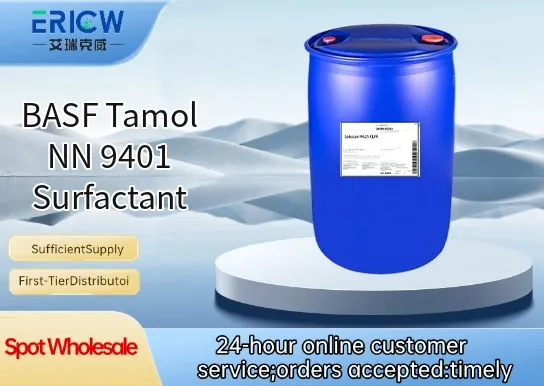
High-performance anionic dispersant based on sodium naphthalene formaldehyde condensate (NFC).
Excellent colloidal stabilization for inorganic pigments and fillers in aqueous systems.
Low foaming profile suitable for high-shear industrial processing environments.
Good compatibility with a broad range of water-based resins, including acrylics, styrene-acrylics, and PVA.
Enables improved grind stability and long-term storage viscosity control.
Architectural and industrial waterborne paints and coatings.
Water-based printing inks, especially for flexographic and gravure applications.
Ceramic tile adhesives and cementitious grouts.
Agrochemical suspension concentrates (SC) and liquid formulations.
Construction chemicals including concrete admixtures and plaster systems.
| Chemical Type | Sodium naphthalene formaldehyde condensate (NFC) |
| Product Form | Aqueous solution (~40% active content) |
| Appearance | Brown to dark brown clear to slightly hazy liquid |
| pH (1% aqueous solution) | 7.5 – 9.0 |
| Density (20 °C) | 1.18 – 1.22 g/cm³ |
| Solubility | Completely miscible with water |
| Primary Applications | Dispersant for pigments, fillers, and solids in aqueous systems |
| Key Features | High dispersing efficiency, low foam, shear-stable |
Q1: What is the primary function of Tamol NN 9401 in industrial formulations?
A: Tamol NN 9401 is a sodium naphthalene formaldehyde condensate surfactant designed primarily as a dispersing agent and wetting aid. It helps stabilize pigment and filler particles in aqueous systems by providing electrostatic repulsion and steric hindrance, thereby improving suspension stability and reducing viscosity.
Q2: In which types of industrial applications is Tamol NN 9401 most commonly used?
A: It is widely employed in water-based pigment dispersions for architectural coatings, industrial paints, ceramic glazes, and construction chemicals such as cement admixtures. Its performance is especially valued in high-solids, low-VOC formulations where particle deagglomeration and long-term storage stability are critical.
Q3: How does Tamol NN 9401 compare to other dispersants in terms of pH stability?
A: Tamol NN 9401 exhibits good stability across a broad pH range, typically maintaining effective dispersion performance between pH 5 and 10. Unlike some polymeric dispersants, it does not require precise pH adjustment for basic functionality, making it robust in variable process environments.
Q4: Is Tamol NN 9401 compatible with common co-additives like defoamers or thickeners?
A: Yes, Tamol NN 9401 generally shows good compatibility with non-ionic thickeners (e.g., HEC, HASE), silicone and mineral oil-based defoamers, and many biocides. However, compatibility should be verified experimentally in the final formulation due to potential interactions with cationic additives or highly associative rheology modifiers.
Contact With Us:
E-mail: wangxingqiang@ericwchem.com
Have a Questions? Call Us:
Add:
Building A1, Jiete Industrial Park, Huangpu District, Guangzhou City, Guangdong Province, China