English
 Español
 tiếng việt
 русский
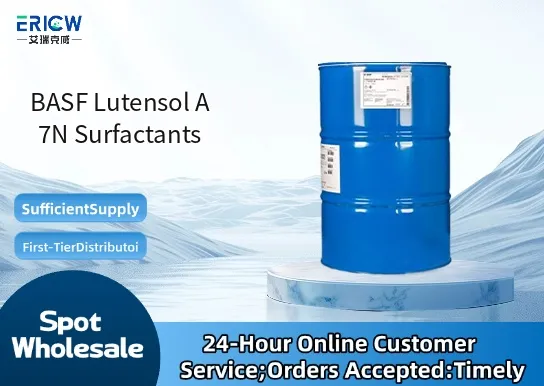
Nonionic alcohol ethoxylate with balanced hydrophilic-lipophilic character for versatile performance.
Excellent wetting and dispersing properties in aqueous systems across a broad pH range.
Good foaming control—moderate foam generation with rapid collapse under shear.
High compatibility with anionic, cationic, and other nonionic surfactants in formulated systems.
Biodegradable profile compliant with OECD 301 series screening tests for ready biodegradability.
Household hard-surface cleaners (e.g., kitchen degreasers and bathroom sanitizers).
Industrial and institutional (I&I) cleaning formulations including floor cleaners and glass cleaners.
Agrochemical adjuvants for improving active ingredient solubilization and leaf spreadability.
Textile auxiliaries in scouring and dyeing processes to enhance fiber wettability.
Paint and coating additives for pigment dispersion stabilization and gloss enhancement.
| Chemical Type | Linear primary alcohol ethoxylate (C13–C15, avg. 7 mol EO) |
| Product Form | Liquid |
| Appearance | Pale yellow to colorless, clear liquid at 25 °C |
| pH (1% aqueous solution, 20 °C) | 5.5 – 7.0 |
| Cloud Point (1% aqueous solution) | ~62 °C |
| Active Content (w/w %) | ≥98.5% |
| Density (20 °C) | 0.99 – 1.01 g/cm³ |
| Viscosity (20 °C) | 150 – 300 mPa·s |
Q1: What is the primary chemical nature of Lutensol A 7N?
A: Lutensol A 7N is a nonionic surfactant based on linear alcohol ethoxylate chemistry, featuring a C12–C14 linear alcohol backbone with an average of approximately 7 moles of ethylene oxide per molecule.
Q2: In which types of industrial cleaning formulations is Lutensol A 7N commonly used?
A: It is widely employed in low-foaming, high-efficiency aqueous cleaners for metalworking, industrial parts washing, and hard-surface cleaning applications—particularly where good soil removal, water-rinsability, and compatibility with electrolytes are required.
Q3: How does Lutensol A 7N perform in hard water conditions?
A: As a nonionic surfactant, Lutensol A 7N exhibits excellent stability and consistent performance in hard water, with minimal sensitivity to calcium and magnesium ions—making it suitable for formulations used in diverse geographical water conditions.
Q4: Is Lutensol A 7N compatible with common anionic and amphoteric surfactants?
A: Yes, Lutensol A 7N demonstrates broad compatibility with anionic surfactants (e.g., LAS, AES) and amphoteric systems (e.g., betaines), enabling synergistic formulation of balanced detergency, foam control, and surface-wetting properties.
Q5: What is the typical dosage range for Lutensol A 7N in finished cleaning products?
A: Dosage depends on formulation requirements and performance targets, but it is typically used at low concentrations—generally ranging from 0.1% to 2% by weight—in industrial aqueous cleaner concentrates and ready-to-use solutions.
Contact With Us:
E-mail: wangxingqiang@ericwchem.com
Have a Questions? Call Us:
Add:
Building A1, Jiete Industrial Park, Huangpu District, Guangzhou City, Guangdong Province, China