English
 Español
 tiếng việt
 русский
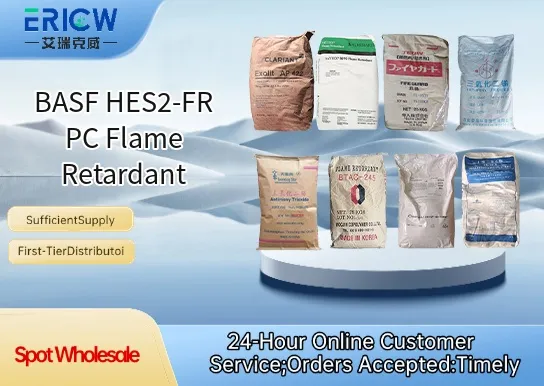
Halogen-free formulation ensuring low smoke density and reduced toxic gas emission during combustion.
Excellent thermal stability compatible with polycarbonate (PC) processing temperatures up to 300 °C.
Maintains high impact strength and dimensional stability of PC blends after flame-retardant addition.
UL 94 V-0 rated at 1.5 mm thickness, meeting stringent international fire safety standards.
Good melt flow behavior enabling consistent injection molding and extrusion performance.
Electrical enclosures and housings for industrial control systems.
LED lighting components including lens covers and heat sinks.
Automotive interior parts such as dashboard trim and center console bezels.
IT and office equipment casings requiring RoHS-compliant flame retardancy.
Public transport interior panels compliant with EN 45545-2 R22 fire safety requirements.
| Chemical Type | Phosphorus-based halogen-free flame retardant masterbatch |
| Product Form | Pellets |
| Appearance | Off-white to light beige free-flowing granules |
| Primary Applications | Polycarbonate (PC) and PC/ABS blends |
| Key Features | UL 94 V-0 (1.5 mm), CTI ≥ 600 V, RoHS & REACH compliant |
| Recommended Loading Range | 8–12 wt% in PC matrix |
| Density (23 °C) | 1.25–1.30 g/cm³ |
| Storage Conditions | Store in dry, cool conditions (<25 °C); protect from moisture |
Q1: What is the primary mechanism of flame retardancy for HES2-FR in polycarbonate?
A: HES2-FR functions primarily through a condensed-phase mechanism, promoting char formation and enhancing thermal stability of the PC matrix during combustion. It does not rely on halogenated chemistry or significant gas-phase radical quenching.
Q2: Is HES2-FR compatible with common polycarbonate grades and typical additives used in engineering thermoplastics?
A: Yes, HES2-FR demonstrates good compatibility with standard bisphenol-A-based polycarbonates and is generally stable in the presence of common stabilizers, UV absorbers, and impact modifiers—though compatibility should be verified under actual processing conditions and formulation profiles.
Q3: How does HES2-FR affect the mechanical and optical properties of PC compounds?
A: When properly dispersed and dosed, HES2-FR typically maintains high transparency and retains key mechanical properties such as impact strength and tensile modulus. Significant property trade-offs may occur at higher loadings, so optimization is recommended for each specific application requirement.
Q4: What is the typical dosage range for achieving UL94 V-0 rating in thin-wall PC parts?
A: Dosage depends on part geometry, wall thickness, and base resin characteristics, but HES2-FR is generally effective at low concentrations—typically ranging from 0.1% to 2% by weight—to achieve UL94 V-0 classification in 1.5 mm PC specimens.
Q5: Can HES2-FR be used in applications requiring regulatory compliance for food contact or indoor air quality?
A: HES2-FR is designed for technical performance in engineering plastics and is not pre-approved for food-contact or low-emission indoor applications. Regulatory suitability must be evaluated case-by-case, considering applicable regional frameworks and final compound testing.
Contact With Us:
E-mail: wangxingqiang@ericwchem.com
Have a Questions? Call Us:
Add:
Building A1, Jiete Industrial Park, Huangpu District, Guangzhou City, Guangdong Province, China