English
 Español
 tiếng việt
 русский
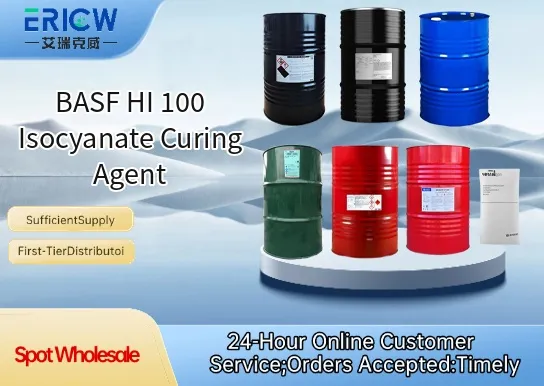
High reactivity with hydroxyl-functional resins for rapid cure at ambient and elevated temperatures.
Excellent compatibility with polyester, acrylic, and polyol-based coating systems.
Low viscosity enables easy handling, precise metering, and uniform film formation.
Delivers superior chemical resistance, hardness, and gloss retention in final coatings.
Compliant with REACH and meets VOC-reduction requirements for industrial finishing applications.
Ambient-cure industrial maintenance coatings for metal structures and equipment.
Automotive refinish clearcoats and basecoat/clearcoat systems.
General-purpose protective coatings for agricultural and construction machinery.
High-performance coil coatings requiring excellent flexibility and corrosion resistance.
Wood furniture and cabinetry finishes demanding fast throughput and durable surface properties.
| Chemical Type | Aliphatic polyisocyanate (hexamethylene diisocyanate trimer) |
| Product Form | Liquid |
| Appearance | Clear, pale yellow liquid |
| NCO Content (wt %) | 15.5–16.5% |
| Viscosity (25°C, mPa·s) | 800–1,200 |
| Density (20°C, g/cm³) | 1.18–1.22 |
| Solvent Content | Acetate-based (non-aromatic) |
| Primary Applications | Two-component polyurethane coatings for industrial, automotive, and wood segments |
Q1: What is the primary function of BASF HI 100 in coating and adhesive formulations?
A: BASF HI 100 is a low-viscosity, aliphatic polyisocyanate curing agent designed to react with hydroxyl-functional resins—such as polyesters, acrylics, or polyethers—to form durable, crosslinked polyurethane networks. It enables excellent weather resistance, gloss retention, and mechanical performance in high-end industrial and automotive topcoats.
Q2: How does HI 100 compare to aromatic isocyanates in terms of color stability and UV resistance?
A: Unlike aromatic isocyanates, HI 100 is based on aliphatic chemistry, which provides superior resistance to UV-induced yellowing and chalking. This makes it particularly suitable for applications where long-term color fidelity and clarity are critical—such as clearcoats, plastic coatings, and exterior architectural finishes.
Q3: What solvent systems is HI 100 typically compatible with?
A: HI 100 exhibits good solubility in common organic solvents used in industrial coatings, including esters (e.g., butyl acetate), ketones (e.g., methyl isobutyl ketone), and aromatic hydrocarbons (e.g., xylene). It is generally not recommended for use in highly polar protic solvents such as water or low-molecular-weight alcohols without prior compatibility testing.
Q4: What are key handling and storage considerations for HI 100?
A: As with all isocyanates, HI 100 must be protected from moisture to prevent gelation or viscosity increase due to reaction with ambient humidity. It should be stored in tightly sealed containers under dry, inert gas (e.g., nitrogen) if possible, at temperatures between 10–30 °C. Personal protective equipment—including nitrile gloves, safety goggles, and respiratory protection—is recommended during handling.
Contact With Us:
E-mail: wangxingqiang@ericwchem.com
Have a Questions? Call Us:
Add:
Building A1, Jiete Industrial Park, Huangpu District, Guangzhou City, Guangdong Province, China