English
 Español
 tiếng việt
 русский
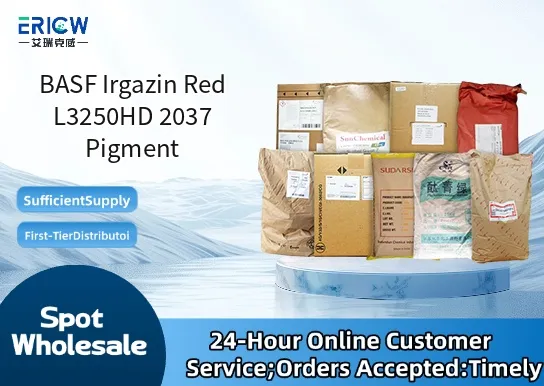
High chroma and excellent color strength for vibrant, consistent red shades.
Outstanding thermal stability suitable for high-temperature processing up to 280 °C.
Excellent lightfastness and weather resistance in demanding outdoor applications.
Good dispersibility in both polar and non-polar polymer systems.
Compliant with major global regulatory frameworks including EU REACH and US FDA indirect food contact requirements (21 CFR §178.3290).
Automotive exterior plastics including bumpers, grilles, and trim components.
Engineering thermoplastics such as polyamide (PA), polypropylene (PP), and ABS.
High-performance industrial coatings requiring long-term color retention.
Electrical and electronic housings where thermal and UV stability are critical.
| Chemical Type | Benzimidazolone pigment |
| Product Form | Free-flowing powder |
| Appearance | Reddish-brown free-flowing powder |
| Primary Applications | Plastics, high-performance coatings, engineering polymers |
| Key Features | High heat stability, excellent lightfastness, good dispersion behavior |
| Benefits | Consistent batch-to-batch color performance, low dust generation, optimized for extrusion processes |
| Regulatory Status | REACH registered; compliant with FDA 21 CFR §178.3290 for indirect food contact |
Q1: What is the primary chemical class and structural type of Irgazin Red L3250HD 2037?
A: Irgazin Red L3250HD 2037 is a high-performance diketopyrrolopyrrole (DPP) pigment, characterized by its fused heterocyclic core, which delivers exceptional chromatic strength, thermal stability, and lightfastness.
Q2: Is this pigment suitable for use in food-contact plastics or regulated packaging applications?
A: Irgazin Red L3250HD 2037 is not certified for direct food-contact applications under major global regulatory frameworks. It is intended for non-food-contact industrial uses such as automotive coatings, industrial plastics, and general-purpose inks where high durability is required.
Q3: How does this grade differ from standard Irgazin Red L3250 in terms of processing and performance?
A: The “HD” designation indicates a high-dispersion version optimized for rapid and uniform incorporation into thermoplastic systems—particularly polyolefins and engineering resins—without requiring extended melt compounding. It offers improved rheological compatibility and reduced filter pressure buildup during extrusion.
Q4: What are typical dosage ranges when using this pigment in polypropylene (PP) or ABS plastic compounds?
A: Dosage depends on the desired shade depth and substrate opacity, but it is typically used at low concentrations—generally ranging from 0.1% to 2% by weight—to achieve strong, clean red tones with excellent dispersion stability.
Contact With Us:
E-mail: wangxingqiang@ericwchem.com
Have a Questions? Call Us:
Add:
Building A1, Jiete Industrial Park, Huangpu District, Guangzhou City, Guangdong Province, China