English
 Español
 tiếng việt
 русский
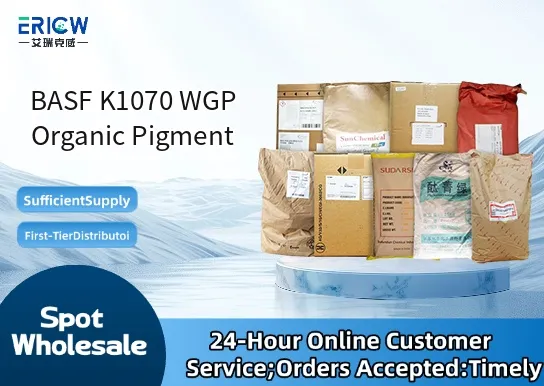
High chroma and excellent color strength in demanding organic pigment applications.
Outstanding thermal stability suitable for high-temperature processing up to 280 °C.
Good lightfastness and weather resistance, meeting ISO 105-B02 and ISO 105-A02 standards.
Excellent dispersibility in polar and non-polar polymer matrices including polyolefins and engineering plastics.
Low volatility and minimal extractables—compliant with FDA 21 CFR §178.3297 and EU Directive 2011/65/EU (RoHS).
Coloration of polypropylene (PP) and polyethylene (PE) fibers and films.
Automotive interior plastics requiring long-term UV and heat resistance.
Engineering thermoplastics including ABS, PC, and PBT for durable consumer goods.
Masterbatch production for injection molding and extrusion processes.
Industrial coatings where high gloss retention and color consistency are critical.
| Chemical Type | Quinacridone derivative |
| Product Form | Free-flowing powder |
| Appearance | Reddish-violet fine powder |
| Primary Applications | Polyolefins, engineering plastics, masterbatches |
| Key Features | Thermal stability, dispersion performance, low migration |
| Benefits | Consistent batch-to-batch color, high processability, regulatory compliance |
| Particle Size (D50) | Approx. 0.15–0.25 µm (by laser diffraction) |
| VOC Content | Non-VOC (≤ 0.1 wt%) |
Q1: What is the primary chemical class and typical hue profile of K1070 WGP?
A: BASF K1070 WGP is a high-performance quinacridone-based organic pigment, offering strong violet-red to bluish-red shades with excellent chroma and clean undertones. Its molecular structure delivers inherent lightfastness and weather resistance suitable for demanding applications.
Q2: Is K1070 WGP suitable for use in food-contact plastics?
A: K1070 WGP is not certified for direct food-contact applications under global regulatory frameworks. It is intended for non-food-contact industrial plastics, coatings, and specialty inks where high thermal stability and dispersion performance are required.
Q3: How does the WGP grade differ from standard pigment grades in terms of processing?
A: The WGP (Wet-Grind Paste) grade is supplied as a pre-dispersed paste in a compatible carrier liquid, enabling easier incorporation, reduced dust generation, and more consistent color development—especially in high-viscosity systems like PVC compounds or solvent-borne coatings.
Q4: What is the recommended approach for achieving optimal dispersion and color strength?
A: For best results, incorporate K1070 WGP during the initial mixing stage using moderate shear. Avoid excessive heat or prolonged high-shear treatment, which may affect rheology or pigment integrity. Dosage typically ranges from 0.1% to 2% by weight depending on the substrate and desired opacity.
Q5: Can K1070 WGP be used in water-based systems?
A: While primarily designed for solvent-borne and plastic compound applications, K1070 WGP can be adapted to water-based systems with appropriate surfactant stabilization and pH control. Compatibility testing is strongly recommended to ensure colloidal stability and film performance.
Contact With Us:
E-mail: wangxingqiang@ericwchem.com
Have a Questions? Call Us:
Add:
Building A1, Jiete Industrial Park, Huangpu District, Guangzhou City, Guangdong Province, China