English
 Español
 tiếng việt
 русский
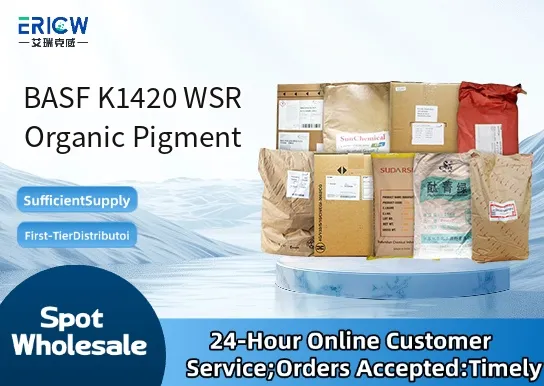
High chroma and excellent color strength in water-based systems.
Outstanding dispersibility with low viscosity build-up in aqueous formulations.
Good lightfastness and weather resistance suitable for outdoor applications.
Low heavy metal content, compliant with global regulatory requirements including EN 71-3 and RoHS.
Stable performance across pH range 6–9, enabling compatibility with common waterborne resins and additives.
Water-based architectural coatings and interior paints.
Industrial waterborne coil and can coatings.
Automotive waterborne basecoats and clearcoat tints.
Printing inks for packaging and labeling (flexo & gravure).
Plastic masterbatches for polyolefins and PVC requiring low-migration pigments.
| Chemical Type | Azo pigment, benzimidazolone derivative |
| Product Form | Free-flowing powder |
| Appearance | Reddish-orange fine powder |
| Primary Applications | Water-based coatings, inks, and plastics |
| Key Features | WSR (Water Stable Redispersion) technology |
| Benefits | Enhanced storage stability and re-dispersibility after drying |
| Recommended Dispersant | Polymeric dispersants (e.g., Disperbyk®-190) |
| Storage Conditions | Keep in original sealed container at 5–30°C, dry and protected from light |
Q1: What is the primary application field for BASF K1420 WSR?
A: BASF K1420 WSR is specifically developed for high-performance solvent-based and radiation-curable inks, coatings, and overprint varnishes where excellent dispersion stability, gloss retention, and lightfastness are required.
Q2: Is K1420 WSR suitable for food-contact applications?
A: While K1420 WSR is designed for technical performance rather than direct food-contact compliance, it may be considered in certain indirect food packaging applications—subject to full regulatory assessment by the formulator and end-user, including migration testing and compliance with applicable regional regulations.
Q3: How does the “WSR” designation relate to pigment performance?
A: The “WSR” suffix indicates a specially engineered surface treatment optimized for wetting and stabilization in low-polarity, solvent-rich systems—enhancing rheological behavior, reducing flocculation, and supporting high-gloss film formation in demanding ink and coating formulations.
Q4: What are typical dosage levels when using K1420 WSR in ink systems?
A: Dosage depends on formulation requirements and desired color strength, but K1420 WSR is typically used at low concentrations—generally ranging from 0.1% to 2% by weight relative to the total ink formulation—to achieve optimal transparency, chroma, and processability.
Contact With Us:
E-mail: wangxingqiang@ericwchem.com
Have a Questions? Call Us:
Add:
Building A1, Jiete Industrial Park, Huangpu District, Guangzhou City, Guangdong Province, China