English
 Español
 tiếng việt
 русский
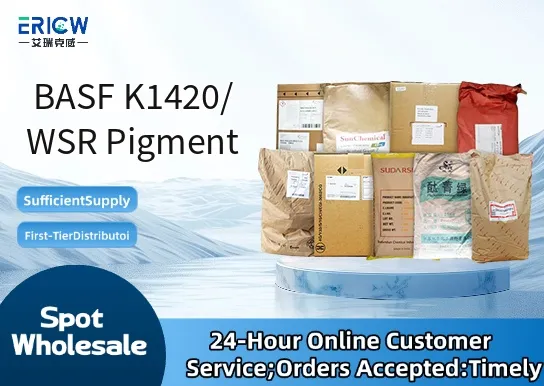
High thermal stability suitable for processing temperatures up to 280 °C.
Excellent dispersion performance in polar and non-polar polymer matrices.
Good lightfastness and weather resistance under standard UV exposure conditions.
Low migration tendency, ensuring color consistency in demanding applications.
Compliant with major global regulatory frameworks including REACH and RoHS.
Automotive interior plastics (dashboards, trim components).
Engineering thermoplastics such as polyamide (PA6, PA66) and polycarbonate (PC).
Electrical and electronic housings requiring long-term color stability.
Consumer goods requiring high-gloss, consistent chroma and minimal bleed.
Industrial coatings where heat resistance and pigment durability are critical.
| Chemical Type | Organic Pigment (Benzimidazolone derivative) |
| Product Form | Free-flowing powder |
| Appearance | Reddish-brown powder |
| Primary Applications | Polymer coloring, high-performance coatings |
| Key Features | Thermal stability, low volatility, excellent dispersibility |
| Benefits | Consistent batch-to-batch color, reduced filter clogging, enhanced melt stability |
| Storage Conditions | Store in cool, dry place; protect from moisture and direct sunlight |
| Regulatory Status | REACH registered; compliant with EU Directive 2002/72/EC for food-contact plastics (subject to specific migration limits) |
Q1: What is the primary function of BASF K1420/ WSR Pigment in polymer systems?
A: BASF K1420/ WSR Pigment is a water-soluble red pigment dispersion designed for coloring hydrophilic polymers and aqueous-based formulations, offering good chromatic strength, stability in neutral to mildly alkaline media, and compatibility with common waterborne resins such as polyvinyl alcohol (PVA), polyacrylates, and certain cellulose derivatives.
Q2: Is BASF K1420/ WSR Pigment suitable for food-contact applications?
A: This product is not pre-approved for direct food-contact use. Its suitability for regulated applications depends on full formulation assessment, final processing conditions, and compliance with applicable regional regulatory frameworks—users must conduct their own due diligence and obtain necessary authorizations before deployment in food-related systems.
Q3: How should BASF K1420/ WSR Pigment be incorporated into aqueous coatings or adhesives?
A: It is typically added during the let-down stage under gentle agitation to avoid foaming or destabilization. Pre-dilution with deionized water may improve dispersion uniformity. Avoid high-shear mixing or prolonged exposure to extreme pH (<5 or >9), elevated temperatures (>60 °C), or strong electrolytes which may affect colloidal stability.
Q4: What storage conditions are recommended to maintain product integrity?
A: Store in original sealed containers at temperatures between 5 °C and 30 °C, away from direct sunlight and freezing conditions. Prolonged storage below 5 °C may cause reversible viscosity increase or phase separation; allow gradual equilibration to room temperature and gentle stirring before use if this occurs.
Q5: Can BASF K1420/ WSR Pigment be used in combination with other pigment dispersions?
A: Yes, it can generally be co-formulated with other water-based pigment dispersions of similar ionic stabilization (e.g., anionic or non-ionic types), provided compatibility testing confirms no flocculation, viscosity instability, or color shift under intended use conditions.
Contact With Us:
E-mail: wangxingqiang@ericwchem.com
Have a Questions? Call Us:
Add:
Building A1, Jiete Industrial Park, Huangpu District, Guangzhou City, Guangdong Province, China