English
 Español
 tiếng việt
 русский
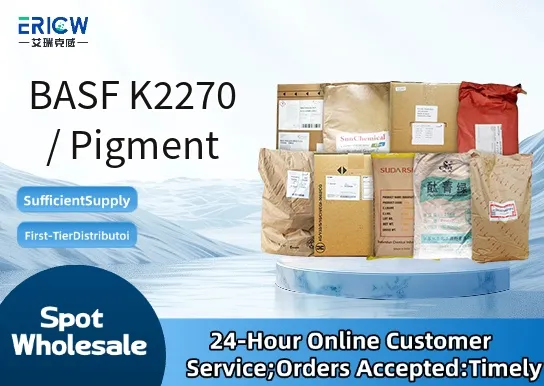
High chroma and excellent lightfastness for long-term color stability.
Optimized particle size distribution ensuring superior dispersion and gloss in coating systems.
Good thermal stability suitable for high-temperature processing up to 220 °C.
Low volatile organic compound (VOC) contribution, supporting sustainable formulation goals.
Compatible with common resin systems including acrylics, polyesters, and alkyds.
Automotive OEM and refinish coatings.
Industrial coil and can coatings.
Plastic coloring for exterior automotive parts.
High-performance powder coatings.
Architectural and industrial maintenance paints.
| Chemical Type | Organic pigment (Benzimidazolone derivative) |
| Product Form | Free-flowing powder |
| Appearance | Reddish-brown free-flowing powder |
| Primary Applications | Coatings, plastics, and inks |
| Key Features | Good weather resistance, heat stability, and dispersibility |
| Benefits | Enhanced color strength and batch-to-batch consistency |
| Recommended Dispersant | Standard polyacrylate or polyester-based dispersants |
| Storage Conditions | Store in cool, dry place; avoid direct sunlight and moisture |
Q1: What is the primary function of BASF K2270/Pigment in polymer systems?
A: BASF K2270/Pigment is a high-performance organic pigment dispersion designed to provide strong, consistent coloration and excellent lightfastness in thermoplastic polymers, particularly polyolefins and engineering plastics. It functions as a ready-to-use liquid colorant offering good dispersibility and thermal stability during melt processing.
Q2: Is BASF K2270/Pigment suitable for food-contact applications?
A: While BASF K2270/Pigment is formulated with components commonly used in regulated polymer coloration, its suitability for food-contact applications depends on the final formulation, processing conditions, and regional regulatory requirements. Customers must conduct full compliance verification—including migration testing and regulatory dossier review—prior to use in food-contact articles.
Q3: How should BASF K2270/Pigment be incorporated into polymer melts?
A: It is typically introduced via gravimetric or volumetric dosing directly into the extruder feed throat or side feeder. Pre-blending with carrier resin is optional but not required. Good mixing efficiency and moderate shear conditions are recommended to ensure uniform dispersion without pigment degradation.
Q4: What storage conditions are recommended to maintain product stability?
A: Store in original sealed containers at temperatures between 5 °C and 30 °C, away from direct sunlight and sources of heat. Avoid freezing, and ensure containers remain tightly closed to prevent solvent evaporation and skin formation.
Contact With Us:
E-mail: wangxingqiang@ericwchem.com
Have a Questions? Call Us:
Add:
Building A1, Jiete Industrial Park, Huangpu District, Guangzhou City, Guangdong Province, China