English
 Español
 tiếng việt
 русский
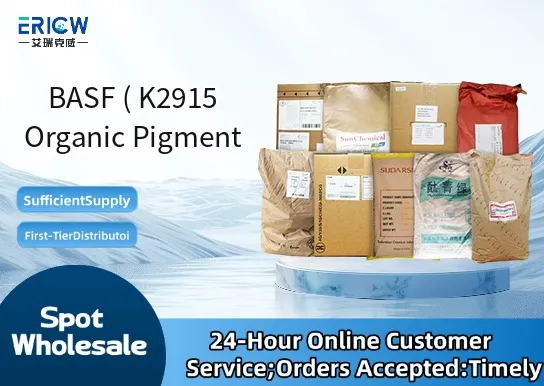
High chromatic strength with excellent color purity in the yellow-orange shade range.
Outstanding thermal stability up to 220 °C, suitable for demanding polymer processing conditions.
Good lightfastness and weather resistance in outdoor applications when properly stabilized.
Low volatility and minimal migration in PVC, polyolefins, and engineering plastics.
Consistent batch-to-batch reproducibility ensured by BASF’s stringent quality control protocols.
Coloration of polyvinyl chloride (PVC) profiles and window frames.
Masterbatch formulations for polypropylene (PP) and polyethylene (PE) packaging films.
Automotive interior plastics requiring high heat stability and low fogging.
Engineering thermoplastics including ABS and polycarbonate for consumer electronics housings.
Industrial coatings where balanced opacity and hue consistency are critical.
| Chemical Type | Azo pigment (disazo condensation type) |
| Product Form | Free-flowing powder |
| Appearance | Orange-red free-flowing powder |
| Primary Applications | Polymer coloration, industrial coatings, masterbatches |
| Key Features | Thermal stability, low migration, high tinctorial strength |
| Benefits | Enhanced processing safety, improved color consistency, reduced dosage requirements |
| Regulatory Compliance | REACH registered; compliant with EU Directive 2002/72/EC for food-contact plastics (subject to specific migration limits) |
| Storage Conditions | Store in cool, dry place below 30 °C; protect from moisture and direct sunlight |
Q1: What is the primary chemical class and typical hue profile of K2915?
A: K2915 is a high-performance perylene-based organic pigment, offering strong violet-red to maroon shades with excellent brightness and clean undertones. Its molecular structure provides inherent stability against thermal stress and light exposure.
Q2: Is K2915 suitable for use in food-contact plastics or regulated packaging applications?
A: K2915 is not pre-approved for direct food-contact applications under major global regulatory frameworks. It may be considered for non-migrating, indirect-contact packaging where pigments are fully encapsulated within polymer matrices—subject to full formulation compliance testing and customer-specific regulatory review.
Q3: How does K2915 perform in high-temperature processing such as injection molding or extrusion?
A: K2915 demonstrates good thermal stability up to approximately 280–300 °C for short residence times, making it suitable for engineering thermoplastics like polyesters, polyamides, and certain polyolefins—provided shear history and melt temperature profiles are carefully controlled.
Q4: What dispersion methods are recommended to achieve optimal color strength and gloss in polymer systems?
A: For best results, K2915 should be incorporated using high-shear compounding—such as twin-screw extrusion—with optimized screw design and residence time. Pre-dispersed concentrates (masterbatches) are strongly recommended over dry blending to ensure uniform distribution and avoid agglomeration-related defects.
Q5: Can K2915 be used alongside other high-performance pigments in multi-pigment formulations?
A: Yes—K2915 exhibits good compatibility with many common high-stability organic pigments (e.g., quinacridones, diketopyrrolopyrroles) and select inorganic pigments. However, pigment interactions affecting hue shift, flocculation, or rheology should be evaluated empirically in the target resin system before scale-up.
Contact With Us:
E-mail: wangxingqiang@ericwchem.com
Have a Questions? Call Us:
Add:
Building A1, Jiete Industrial Park, Huangpu District, Guangzhou City, Guangdong Province, China