English
 Español
 tiếng việt
 русский
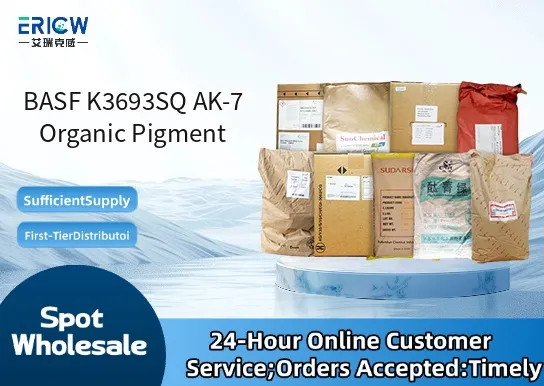
High chroma and excellent color strength in demanding pigmentary applications.
Outstanding thermal stability up to 280 °C, suitable for high-temperature processing.
Good lightfastness and weather resistance in outdoor polymer applications.
Excellent dispersibility in polyolefins and engineering thermoplastics.
Low volatility and minimal plate-out tendency during extrusion and injection molding.
Polypropylene (PP) and polyethylene (PE) fibers and films.
Automotive interior and exterior plastic components.
Household appliances with colored thermoplastic housings.
Industrial packaging requiring consistent, fade-resistant coloration.
Technical parts in electrical and electronic enclosures.
| Chemical Type | Quinacridone derivative |
| Product Form | Free-flowing powder |
| Appearance | Reddish-violet fine powder |
| Primary Applications | Polyolefins, engineering plastics, masterbatches |
| Key Features | Thermal stability, dispersion performance, color consistency |
| Benefits | Reduced processing defects, improved batch-to-batch reproducibility |
| Regulatory Compliance | REACH registered; compliant with FDA 21 CFR §178.3290 for food-contact plastics (when used as specified) |
Q1: What is the primary application area for BASF K3693SQ AK-7?
A: BASF K3693SQ AK-7 is a high-performance organic pigment specifically developed for demanding plastic coloration applications, including polyolefins (PP, PE), engineering plastics (e.g., ABS, PS), and masterbatches where excellent heat stability, dispersion behavior, and color strength are required.
Q2: How does K3693SQ AK-7 perform under high-temperature processing conditions?
A: This pigment exhibits very good thermal stability, enabling reliable performance during standard melt processing of thermoplastics—such as extrusion and injection molding—at temperatures commonly encountered in industrial production. Its stability profile supports consistent color development without significant degradation or gas evolution.
Q3: Is K3693SQ AK-7 suitable for food-contact plastic applications?
A: While K3693SQ AK-7 is not marketed as a food-contact compliant pigment, it may be evaluated for such use depending on final formulation, regulatory jurisdiction, and migration testing outcomes. Customers must conduct full regulatory assessment—including compatibility with applicable food contact legislation—and obtain formal approval prior to use in food-contact applications.
Q4: What is the typical dosage range for achieving optimal coloration in plastics?
A: Dosage depends on the polymer matrix, desired shade intensity, and processing method, but K3693SQ AK-7 is typically used at low concentrations—generally ranging from 0.1% to 2% by weight in final plastic compounds—to deliver strong, clean coloration with good opacity and minimal impact on mechanical properties.
Q5: How should K3693SQ AK-7 be dispersed in polymer systems?
A: For best results, K3693SQ AK-7 should be incorporated using standard high-shear compounding techniques—such as twin-screw extrusion—often in pre-dispersed masterbatch form. Proper dispersion is critical to achieving uniform color, optimal tinctorial strength, and avoidance of specks or agglomerates in the final part.
Contact With Us:
E-mail: wangxingqiang@ericwchem.com
Have a Questions? Call Us:
Add:
Building A1, Jiete Industrial Park, Huangpu District, Guangzhou City, Guangdong Province, China