English
 Español
 tiếng việt
 русский
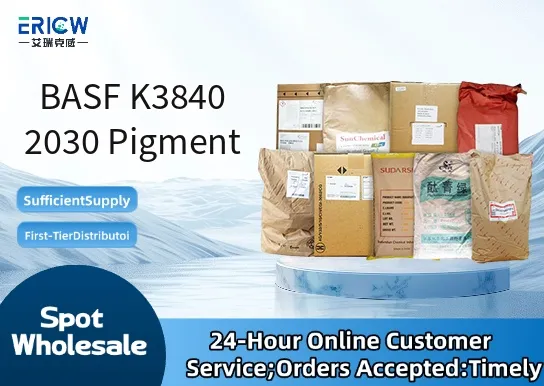
High chroma and excellent lightfastness for long-term color stability.
Optimized particle size distribution ensuring superior dispersion and gloss development.
Good thermal stability suitable for high-temperature processing up to 220 °C.
Low volatile organic compound (VOC) content, supporting sustainable formulation requirements.
Compatible with a broad range of polymer matrices including polyolefins, engineering plastics, and thermoplastic elastomers.
Automotive interior components (dashboards, trim, door panels).
Packaging films and containers requiring food-contact compliance (EU 10/2011, FDA 21 CFR).
Household appliances with demanding aesthetic and durability requirements.
Consumer electronics housings and accessories.
Industrial and agricultural plastic parts exposed to outdoor weathering.
| Chemical Type | Organic pigment (Benzimidazolone derivative) |
| Product Form | Free-flowing granular concentrate |
| Appearance | Reddish-orange granules |
| Primary Applications | Polyolefins (PP, PE), ABS, PS, and TPE compounds |
| Key Features | Excellent heat stability, low migration, high tinctorial strength |
| Benefits | Consistent batch-to-batch color reproducibility and reduced dosing variability |
| Regulatory Status | Compliant with EU REACH, RoHS, and global food-contact regulations |
| Recommended Carrier | Polypropylene or polyethylene base |
Q1: What is the primary application field for BASF K3840 2030 Pigment?
A: BASF K3840 2030 Pigment is specifically engineered for use in high-performance industrial coatings and plastics applications where excellent heat stability, lightfastness, and dispersibility are required — particularly in automotive topcoats, engineering thermoplastics, and powder coatings.
Q2: Is K3840 2030 suitable for food-contact plastic applications?
A: While K3840 2030 exhibits good chemical resistance and thermal stability, it is not pre-qualified for direct food-contact applications under global regulatory frameworks. Formulators must conduct full regulatory assessment—including migration testing and compliance verification—based on their specific end-use conditions and applicable regional requirements.
Q3: How should K3840 2030 be dispersed in polymer systems?
A: Optimal dispersion is achieved using high-shear compounding or extrusion processes. Pre-treatment is generally not required, but compatibility with common carrier resins (e.g., acrylics, polyesters, and certain polyolefins) supports efficient incorporation. Dispersion performance may vary depending on resin polarity and processing temperature.
Q4: Does K3840 2030 offer UV resistance suitable for outdoor applications?
A: Yes — K3840 2030 delivers robust UV stability and weather resistance, making it appropriate for exterior-grade coatings and plastics exposed to prolonged sunlight and environmental stress, especially when combined with compatible stabilizer systems.
Contact With Us:
E-mail: wangxingqiang@ericwchem.com
Have a Questions? Call Us:
Add:
Building A1, Jiete Industrial Park, Huangpu District, Guangzhou City, Guangdong Province, China