English
 Español
 tiếng việt
 русский
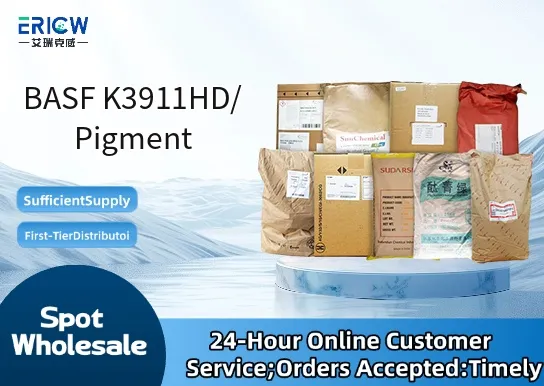
High chroma and excellent color strength for vivid, consistent tinting performance.
Outstanding thermal stability up to 280 °C, suitable for high-temperature polymer processing.
Good dispersibility in both polar and non-polar media, enabling efficient incorporation into diverse resin systems.
Excellent lightfastness (ISO 105-B02: Grade 7–8) and weather resistance for long-term outdoor durability.
Low migration tendency, meeting stringent regulatory requirements for food-contact and toy applications.
Polyolefin masterbatches (PP, PE) for automotive interior trims and packaging films.
Engineering plastics including ABS, PC, and PBT for consumer electronics housings.
Coating systems for industrial metal finishes and plastic coatings requiring high gloss retention.
Flexible PVC compounds for medical tubing and wire & cable sheathing.
Thermoplastic elastomers (TPEs) used in soft-touch grips and sealing profiles.
| Chemical Type | Organic Pigment (Benzimidazolone derivative) |
| Product Form | Fine free-flowing powder |
| Appearance | Reddish-orange powder |
| Primary Applications | Polyolefins, engineering plastics, coatings, flexible PVC |
| Key Features | High thermal stability, low migration, excellent dispersion |
| Benefits | Consistent batch-to-batch color, reduced processing defects, compliance-ready |
| Regulatory Status | EU REACH registered; compliant with FDA 21 CFR §178.3297 and EN71-3 |
| Particle Size (D50) | 0.15–0.25 µm (by laser diffraction) |
Q1: What is BASF K3911HD/Pigment primarily used for?
A: BASF K3911HD/Pigment is a high-performance organic pigment dispersion designed for demanding industrial coating and ink applications, particularly where excellent color strength, lightfastness, and thermal stability are required — such as in automotive refinish, industrial maintenance coatings, and packaging inks.
Q2: Is BASF K3911HD/Pigment compatible with water-based and solvent-based systems?
A: Yes, K3911HD/Pigment is formulated to offer broad compatibility across both aqueous and organic solvent-based media. Its stabilized dispersion technology supports stable integration into acrylic, polyester, alkyd, and polyurethane resin systems, though optimal performance may require minor adjustment of rheology or wetting agents depending on the base formulation.
Q3: How should BASF K3911HD/Pigment be incorporated into a formulation?
A: It is recommended to add K3911HD/Pigment during the let-down or post-addition stage under moderate shear to avoid deagglomeration issues. Pre-dilution with a compatible carrier solvent or resin solution may improve dispersion uniformity. Final dosage typically depends on target color strength and opacity requirements, generally ranging from 0.1% to 2% by weight relative to total formulation solids.
Q4: Does BASF K3911HD/Pigment meet regulatory requirements for food-contact applications?
A: BASF K3911HD/Pigment is not intended for direct food-contact applications unless explicitly validated and approved within a specific end-use system. Formulators must conduct full regulatory assessment — including migration testing and compliance verification — based on final cured film composition, substrate, and intended use conditions.
Contact With Us:
E-mail: wangxingqiang@ericwchem.com
Have a Questions? Call Us:
Add:
Building A1, Jiete Industrial Park, Huangpu District, Guangzhou City, Guangdong Province, China