English
 Español
 tiếng việt
 русский
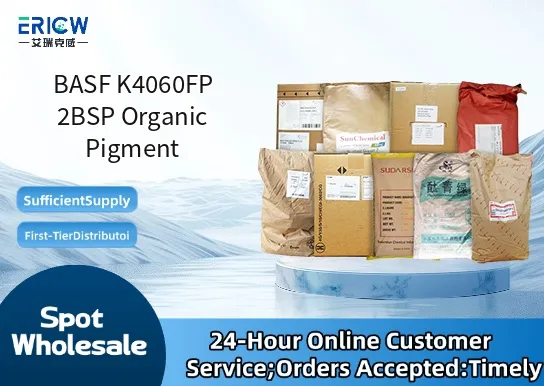
High chroma and excellent color strength in demanding polymer systems.
Outstanding thermal stability up to 280 °C, suitable for engineering plastics processing.
Good lightfastness and weather resistance in outdoor applications.
Low migration behavior in PVC, polyolefins, and styrenics.
Optimized particle size distribution for balanced dispersion and rheology control.
Coloration of polypropylene (PP) and polyethylene (PE) fibers and films.
Engineering plastics including ABS, PS, and polycarbonate blends.
PVC rigid and flexible profiles, cables, and flooring compounds.
Automotive interior components requiring long-term color retention.
Consumer goods packaging where regulatory compliance and clarity are critical.
| Chemical Type | Benzimidazolone pigment |
| Product Form | Free-flowing powder |
| Appearance | Reddish-orange powder |
| Primary Applications | Polyolefins, PVC, engineering plastics |
| Key Features | Thermal stability, low migration, high tinctorial strength |
| Regulatory Compliance | EU REACH registered; compliant with FDA 21 CFR §178.3297 (for polymers) |
| Recommended Carrier | Standard masterbatch carriers (e.g., PP, PE, EVA) |
| Storage Conditions | Store in cool, dry place; avoid direct sunlight and moisture |
Q1: What is the primary application field for BASF K4060FP 2BSP?
A: BASF K4060FP 2BSP is a high-performance organic pigment specifically developed for demanding plastic applications, particularly in polyolefins (e.g., PP and PE) and engineering thermoplastics where excellent heat stability, lightfastness, and dispersion behavior are required.
Q2: Is this pigment suitable for food-contact plastics?
A: BASF K4060FP 2BSP is designed for use in plastics intended for indirect food contact applications. Its suitability depends on final formulation, processing conditions, and compliance with applicable regional regulatory frameworks—users must conduct full regulatory assessment and migration testing as part of their due diligence.
Q3: How does K4060FP 2BSP perform under high-temperature processing?
A: This pigment exhibits very good thermal stability, enabling safe use in high-shear and high-temperature compounding processes typical for polypropylene and other engineering resins. It maintains color strength and hue integrity without significant degradation up to standard processing temperatures for these polymers.
Q4: What is the recommended dosage range in polymer systems?
A: Dosage is formulation-dependent, but K4060FP 2BSP is typically used at low concentrations—generally ranging from 0.1% to 2% by weight—to achieve strong, clean coloration while maintaining optimal dispersion and mechanical properties.
Contact With Us:
E-mail: wangxingqiang@ericwchem.com
Have a Questions? Call Us:
Add:
Building A1, Jiete Industrial Park, Huangpu District, Guangzhou City, Guangdong Province, China