English
 Español
 tiếng việt
 русский
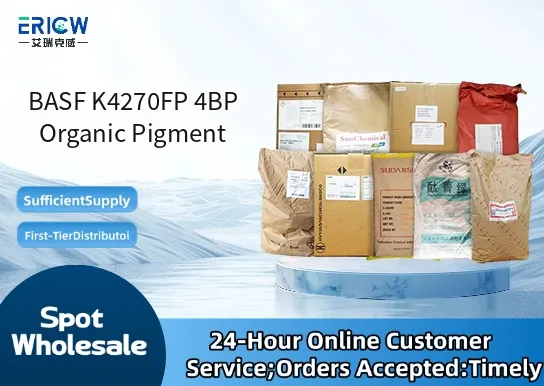
High chroma and excellent color strength in demanding solvent-based systems.
Outstanding thermal stability up to 280 °C, suitable for high-temperature processing.
Good lightfastness and weather resistance, meeting ISO 105-B02 Class 7–8 requirements.
Low volatile organic compound (VOC) content, supporting sustainable formulation goals.
Excellent dispersibility in polyolefin and engineering thermoplastics without surfactant assistance.
Automotive interior and exterior plastic components (PP, ABS, PC/ABS).
Household appliance housings requiring long-term color retention.
Industrial packaging films and containers exposed to UV and heat.
Technical injection-molded parts for electronics and construction sectors.
Masterbatch concentrates for coloration of polyolefins and styrenic polymers.
| Chemical Type | Benzimidazolone derivative |
| Product Form | Free-flowing powder |
| Appearance | Reddish-brown free-flowing powder |
| Primary Applications | Polyolefins, engineering plastics, masterbatches |
| Key Features | Thermal stability, dispersion efficiency, low migration |
| Benefits | Consistent batch-to-batch color, reduced filtration pressure, high gloss retention |
| Regulatory Compliance | EU REACH registered; compliant with FDA 21 CFR §178.3297 for indirect food contact applications |
| Storage Conditions | Store in cool, dry place below 30 °C; protect from moisture and direct sunlight |
Q1: What is the primary chemical class and typical application focus of K4270FP 4BP?
A: K4270FP 4BP is a high-performance quinacridone-based organic pigment, engineered for demanding applications requiring excellent lightfastness, weather resistance, and thermal stability—particularly in automotive coatings, industrial finishes, and high-end plastics where long-term color integrity is critical.
Q2: Is K4270FP 4BP suitable for use in food-contact plastics or packaging inks?
A: This pigment is not pre-approved for direct food-contact applications under major global regulatory frameworks. Its use in such systems requires full formulation-level compliance assessment—including migration testing and regulatory review—by the end-user or compounder, as pigments do not carry blanket food-contact clearance.
Q3: How does K4270FP 4BP perform in high-temperature processing environments, such as engineering thermoplastics?
A: It demonstrates robust thermal stability suitable for processing temperatures up to approximately 280–300 °C in short-term melt operations, making it compatible with polyesters, polyamides, and certain polycarbonate blends—though optimal dispersion and stabilization must be validated per specific resin system and residence time.
Q4: What are recommended dispersion methods for achieving optimal color strength and gloss in solvent-borne coatings?
A: High-shear dispersion using appropriate dispersing agents and milling media (e.g., glass or ceramic beads) is strongly recommended. Pre-wetting with compatible solvents and controlled temperature management during grinding help maximize primary particle deagglomeration and achieve consistent hue, transparency, and film clarity.
Contact With Us:
E-mail: wangxingqiang@ericwchem.com
Have a Questions? Call Us:
Add:
Building A1, Jiete Industrial Park, Huangpu District, Guangzhou City, Guangdong Province, China