English
 Español
 tiếng việt
 русский
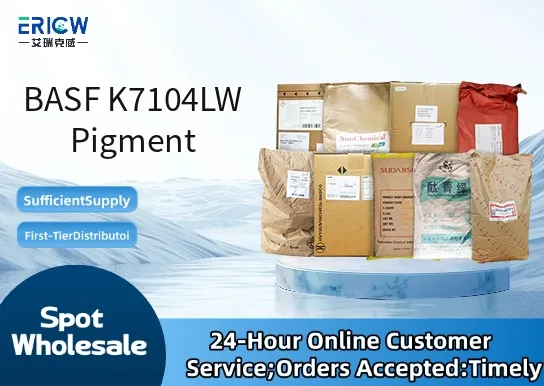
High chroma and excellent lightfastness for long-term color stability.
Optimized particle size distribution ensuring superior dispersion and gloss development.
Low volatile organic compound (VOC) content, supporting sustainable coating formulations.
Good thermal stability suitable for baking applications up to 180 °C.
Compatible with a broad range of resin systems including acrylics, polyesters, and epoxy esters.
Automotive OEM and refinish coatings.
Industrial coil coatings for metal roofing and appliances.
General industrial maintenance paints.
Plastic color concentrates for exterior automotive components.
High-performance powder coatings requiring consistent hue and batch-to-batch reproducibility.
| Chemical Type | Organic Pigment (Benzimidazolone derivative) |
| Product Form | Free-flowing powder |
| Appearance | Reddish yellow powder |
| Primary Applications | High-performance liquid and powder coatings |
| Key Features | Excellent weather resistance and chemical stability |
| Benefits | Enhanced opacity and tinting strength with low dosage requirement |
| Storage Conditions | Store in dry, cool, well-ventilated area; protect from moisture and direct sunlight |
| Regulatory Compliance | REACH registered; compliant with EU Directive 2004/42/EC (VOC limits) |
Q1: What is the primary application field for BASF K7104LW Pigment?
A: BASF K7104LW is a high-performance, low-migration organic pigment specifically developed for use in food-contact plastics, including polyolefins and polyesters used in packaging films, containers, and closures.
Q2: Is BASF K7104LW compliant with food-contact regulations in major markets?
A: Yes — K7104LW is designed to meet the general safety requirements for pigments in food-contact applications under frameworks such as FDA 21 CFR and EU Regulation (EC) No 1935/2004. Its formulation avoids restricted substances and supports compliance when used within recommended processing and dosage guidelines.
Q3: How does K7104LW perform under thermal processing conditions?
A: K7104LW exhibits excellent thermal stability, maintaining color integrity and dispersion quality during standard extrusion and injection molding processes for polyolefins and PET — typically up to 280 °C for short residence times.
Q4: What is the typical dosage range for effective coloring in polymer systems?
A: Dosage depends on the base polymer, desired shade intensity, and processing method, but K7104LW is generally used at low concentrations — typically ranging from 0.1% to 2% by weight — due to its high tinctorial strength and efficient dispersion behavior.
Contact With Us:
E-mail: wangxingqiang@ericwchem.com
Have a Questions? Call Us:
Add:
Building A1, Jiete Industrial Park, Huangpu District, Guangzhou City, Guangdong Province, China