English
 Español
 tiếng việt
 русский
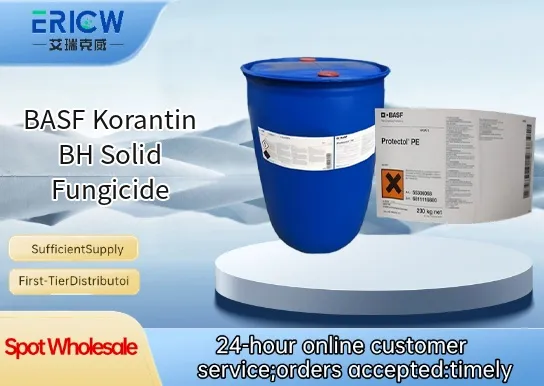
Highly effective broad-spectrum fungicidal activity against key Ascomycete and Basidiomycete pathogens.
Optimized solid formulation ensures excellent storage stability and reduced dust generation during handling.
Enhanced rainfastness and residual protection due to controlled-release particle matrix technology.
Low mammalian toxicity profile, supporting sustainable agricultural practices and worker safety compliance.
Compatible with integrated pest management (IPM) programs and major adjuvants used in conventional spray systems.
Vineyards for control of powdery mildew (Erysiphe necator) and botrytis bunch rot (Botrytis cinerea).
Apple and pear orchards targeting scab (Venturia inaequalis and V. pirina) and summer rots.
Strawberry production systems managing gray mold and anthracnose (Colletotrichum acutatum).
Protected horticulture (greenhouse tomatoes, cucumbers) for prevention of leaf spot and blight diseases.
| Chemical Type | Triazole-class systemic fungicide (active ingredient: difenoconazole) |
| Product Form | Granular solid (water-dispersible granules, WG) |
| Appearance | Free-flowing beige to light brown granules |
| Active Ingredient Concentration | 250 g/kg difenoconazole |
| Primary Applications | Fruit crops, vegetables, ornamentals, and protected cultivation |
| Key Features | Systemic action, translaminar movement, protective & curative activity |
| Benefits | Flexible application timing, resistance management support, low phytotoxicity |
| Storage Conditions | Store in cool, dry place below 30°C; protect from direct sunlight and moisture |
Q1: What is the primary mode of action of Korantin BH Solid Fungicide?
A: Korantin BH Solid Fungicide acts primarily through inhibition of mitochondrial respiration in target fungi, specifically by interfering with complex III (cytochrome bc₁) in the electron transport chain. This leads to rapid cessation of energy production and fungal growth suppression.
Q2: In which types of industrial formulations is Korantin BH Solid most commonly incorporated?
A: Korantin BH Solid is widely used in water-based industrial coatings, adhesives, sealants, construction mortars, and non-woven textile treatments—particularly where long-term dry-film protection against mold and mildew is required under humid or challenging environmental conditions.
Q3: How does the solid physical form benefit formulation stability and handling?
A: As a free-flowing solid, Korantin BH offers enhanced thermal and hydrolytic stability compared to liquid alternatives, simplifies metering and dispersion in high-shear processes, and eliminates solvent-related volatility or compatibility concerns during storage and manufacturing.
Q4: Is Korantin BH Solid compatible with common biocide stabilizers and co-biocides?
A: Yes—Korantin BH Solid demonstrates good compatibility with typical formulation additives including pH buffers, thickeners, and complementary biocides such as isothiazolinones or benzisothiazolinone derivatives, though compatibility testing under final use conditions is recommended.
Q5: What safety and regulatory considerations apply to its use in industrial applications?
A: Korantin BH Solid is intended for professional industrial use only and must be handled in accordance with local occupational health and safety regulations. It is not approved for direct food-contact applications or consumer products without prior regulatory evaluation and authorization.
Contact With Us:
E-mail: wangxingqiang@ericwchem.com
Have a Questions? Call Us:
Add:
Building A1, Jiete Industrial Park, Huangpu District, Guangzhou City, Guangdong Province, China