English
 Español
 tiếng việt
 русский
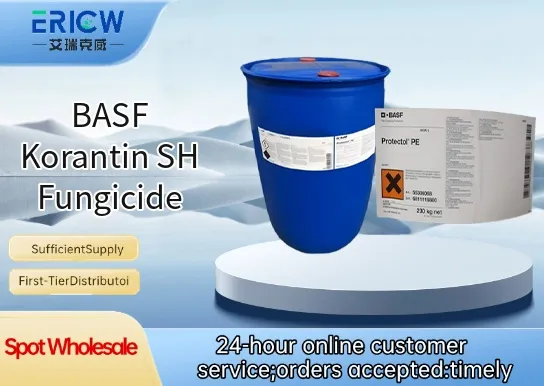
Advanced strobilurin-based formulation delivering broad-spectrum control against key foliar and soil-borne fungal pathogens.
Systemic and translaminar activity ensures rapid uptake and long-lasting protection under variable environmental conditions.
Flexible application timing—effective at preventive, curative, and early-infection stages across multiple crop growth phases.
Designed for resistance management with favorable FRAC classification (Group 11) and compatibility in integrated pest management (IPM) programs.
Low-use-rate formulation enhances operational efficiency and reduces handling volume without compromising efficacy.
Cereal crops—including wheat, barley, and oats—for control of Septoria tritici blotch, rusts, and powdery mildew.
Oilseed rape (canola) targeting Alternaria black spot and Sclerotinia stem rot during flowering and pod-fill stages.
Soybean production systems managing frogeye leaf spot (Cercospora sojina) and brown spot (Septoria glycines).
Sugar beet cultivation for suppression of Cercospora leaf spot and Ramularia leaf spot.
Vegetable crops such as tomatoes and peppers, where targeted control of early blight (Alternaria solani) and anthracnose is required.
| Chemical Type | Strobilurin (Trifloxystrobin) |
| Product Form | Concentrated Suspension (SC) |
| Appearance | Off-white to light beige suspension |
| Active Ingredient Concentration | 250 g/L Trifloxystrobin |
| pH Range (1% aqueous solution) | 6.0 – 7.5 |
| Density (20°C) | 1.12 – 1.18 g/cm³ |
| Storage Stability | ≥ 24 months in unopened original container at 5–30°C |
| Primary Mode of Action | Inhibits mitochondrial respiration (Complex III) |
Q1: What is the primary mode of action of Korantin SH fungicide?
A: Korantin SH is a broad-spectrum fungicide with multi-site inhibitory activity, primarily targeting fungal respiration and cell membrane integrity. Its formulation is designed to provide protective and curative effects against key foliar and soil-borne pathogens in agricultural and horticultural settings.
Q2: Is Korantin SH compatible with common tank-mix partners such as insecticides or plant growth regulators?
A: Korantin SH generally demonstrates good physical and chemical compatibility with many widely used agrochemicals, including select organophosphates, pyrethroids, and triazole-based fungicides. However, compatibility testing under actual field conditions is strongly recommended prior to large-scale tank mixing.
Q3: What types of crops and application methods is Korantin SH typically used for?
A: Korantin SH is formulated for use on a range of field crops, vegetables, and ornamentals. It is commonly applied via foliar spray, but also supports soil drench and seed treatment applications depending on the final product format and regulatory approvals in the target market.
Q4: How should Korantin SH be stored to maintain optimal stability and efficacy?
A: Store Korantin SH in its original, tightly sealed container in a cool, dry, and well-ventilated area away from direct sunlight and sources of heat or ignition. Avoid prolonged exposure to freezing temperatures or excessive humidity to preserve formulation integrity and performance consistency.
Contact With Us:
E-mail: wangxingqiang@ericwchem.com
Have a Questions? Call Us:
Add:
Building A1, Jiete Industrial Park, Huangpu District, Guangzhou City, Guangdong Province, China